

KINGSTOWN, St. Vincent, Aug 5, CMC – A lawyer for the two main public sector unions here has described as “a sinister move” the proposed changes to the Public Health Act to address the question of mandatory COVID-19 vaccination of some categories of workers.
Jomo Thomas said the legislation to be debated in Parliament on Thursday is “probably one of the most significant pieces of legislation that will come before the House of Assembly”.
“All of us should pay close attention, read and come to a conclusion, discuss it with our friends, discuss it with our colleagues,” he told a joint press conference of the Public Service Union, the SVG Teachers’ Union and the Police Welfare Association (PWA) called to address the issue.
Thomas said the existing Act made an exemption for children, but the amendment proposes to delete that protection.
He pointed out that in Britain, which he noted has many more scientists and research institutions than St. Vincent, the government has said that it is not yet sure that COVID-19 vaccines are suitable for children.
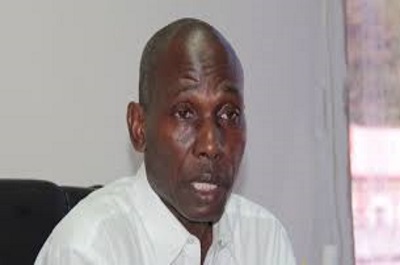
“When we see what I perceive to be a very sinister move to remove that protection in the current Act, it tells me that the government is probably thinking and may very well force our children to undergo vaccination, unless people make a strong roar to say ‘not my child’,” Thomas said. “So that’s something that I think citizens, across the board, have to pay attention to.”
Israel Bruce, who is the PWA’s lawyer and an opposition senator, said that if Parliament approves the amendment, any relevant persons seeking exemption must get approval from the Chief Medical Officer in addition to any physician expressing the view that the person should be exempted.
Thomas noted that the proposed changes to the law seek to remove the word “voluntary” as it relates to the vaccination programme. In February 2021, Cabinet passed a statutory rule and order that inserted the word “voluntary” as it relates to the vaccination programme.
“Now this government will have to say to us what has happened in the last six months that necessitates it removing the word ‘voluntary’ from the immunization programme,” Thomas said.
He said that there is something “even more sinister” in the removal of the section that makes the vaccination programme voluntary.
“When you remove the word ‘voluntary’, it is really, in essence, giving carte blanche, giving the private sector to do what the government may not be able to do across the board.
“So, you may recall a few weeks ago, about five or six weeks ago, on the Issue at Hand programme, the Prime Minister publicly declared to one of the major private sector persons in this country…he literally tell them what to do: make sure you give the notice, make sure you do this, make sure you do that. And, more than that, if you need more I will go back to Parliament and make sure it is done. And that is what he is doing now, by the removal of the word ‘voluntary’,” he said.
Responding to Prime Minister Dr. Ralph Gonsalves saying that common law and statutory law allow for employers to provide a safe and healthy workplace and that the law currently allows for mandatory vaccination, the attorney said: “That is a very broad, expansive reading of that law, because what that law says is that the minister, in confronting a particular emergency, may have a whole series of things he or she may do, including an immunization and vaccination programme.”
He emphasized that all that the Public Health Act, which dates back to 1977, allows, must “come back to the constitutional mandate”.
“And the constitutional mandate says that whatever the government does has to be reasonably required, whatever the government does has to be necessary in order to ensure that its purpose is carried out, whatever the government does has to be proportionate,” Thomas said.
The government has repeatedly stated that the Constitution allows for exceptions to the rights it guarantees citizens, once that exception is reasonable.
However, Thomas said: “Of course, there are exceptions to these constitutional dictates but reasonableness is not an arbitrary term. It is a term that has very tight strictures and you cannot just willy-nilly say that this is arbitrary or this is not arbitrary.”
“The question has to be in looking at what is reasonably necessary and proportionate, what is the country-specific reality in establishing reasonableness or necessity. It cannot be that because there is an explosive situation in Vanuatu in the Pacific Ocean that we have to respond in the same way or because Boston is exploding or Calgary is exploding that we have to respond in the same way.
“Because just as in economics one size doesn’t fit all, it’s the same thing that holds in health. So those are the hurdles, those are the legal constitutional hurdles that this government would have to go over: reasonableness, necessity and proportionality,” he added.
CMC/kc/ed/2021