
KINGSTOWN, St. Vincent, Apr 22, CMC – The executive director of the Belize-based Caribbean Community Climate Change Centre (CCCCC) Dr. Colin Young, is calling for a change to the current situation where stakeholders in St. Vincent and the Grenadines are affected even as the country contributes less than a fraction of one per cent to global greenhouse gas emissions.
“.… its farmers, fisherfolk, and families are asked to adapt, absorb, and recover, repeatedly, with insufficient means of implementation from those most responsible for causing climate change,” Young told a Climate Adaptation Action workshop that ends here on Thursday.
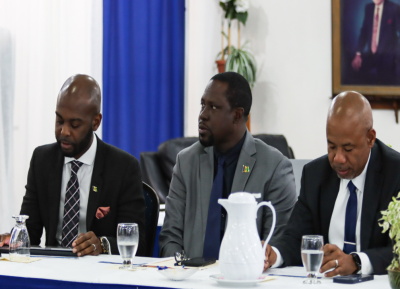 “That must change,” he said, noting “resilience must be planned, resourced, and institutionalised across the whole of the economy”.
The workshop has brought together policymakers, technical officers, private sector representatives, civil society, and community stakeholders to advance the country’s climate resilience agenda.
It is being held under two Green Climate Fund (GCF)-supported National Adaptation Plan (NAP) projects implemented by the CCCCC in partnership with St. Vincent and the Grenadine’s Sustainable Development Unit (SDU).
The National Adaptation Plans establishes St. Vincent and the Grenadines’ framework for managing climate risks across the economy, institutional responsibilities, and financing needs required to protect lives, livelihoods, infrastructure, and ecosystems.
The Revised NAP reflects updated climate science, lessons from past disasters, including Hurricane Beryl, which caused widespread damage to SVG’s infrastructure, agriculture and coastal communities in 2024 and reaffirms the country’s commitment to a people-centred development pathway.
During the workshop, the participants will move beyond reviewing documents to building the ownership and shared understanding that is essential for implementation. Group sessions, plenary discussions, and technical working segments are designed to clarify institutional responsibilities, identify necessary partnerships, and define early actions that can begin immediately.
Tourism, Civil Aviation and Sustainable Development Minister, Dr. Kishore Shallow, said that climate change poses a direct challenge to every dimension of the country’s tourism economy.
“When we speak about sea level rise, coastal erosion, stronger storm impacts, or ecosystem degradation, we are also speaking about risks to destination appeal, investor confidence, and the long-term competitiveness of Saint Vincent and the Grenadines.”
Shallow called on private sector partners, hotels, tour operators, dive operators, and community-based enterprises to treat climate adaptation as a core part of good business practice and urged all participants to treat the workshop as a working moment for action.
Fisheries, Marine and Land Conservation and Climate Resilience Minister, Conroy Huggins highlighted the urgency of the workshop in a stark figure given that approximately 90 per cent of the island’s key infrastructure is located along the coastline.
“We cannot protect our fisheries without protecting the ecosystems that sustain them. We cannot safeguard our coasts without improving planning and investment. And we cannot build resilience if communities, technical agencies, and decision-makers are all moving in separate directions,” Huggins added.
MC/hj/ir/2026