
BASSETERRE, St Kitts, May 27, CMC – The St. Kitts and Nevis government is defending its decision not to allow 17 Nigerians entry into the twin island Federation, saying that the “decision was not taken lightly.
“It was made on the advice of the competent health authorities, in keeping with our national responsibility to protect public health during a period of heightened global concern regarding Ebola,” the Ministry of National Security said in a statement.
 “St. Kitts and Nevis has always valued its warm and respectful relationship with the people of Nigeria. We remain a welcoming nation, and we deeply regret any inconvenience or distress caused to our Nigerian brothers and sisters affected by this necessary public health measure.
“At this time, our foremost duty is to act with caution, responsibility, and in accordance with health guidance, while continuing to treat all persons with dignity and respect.”
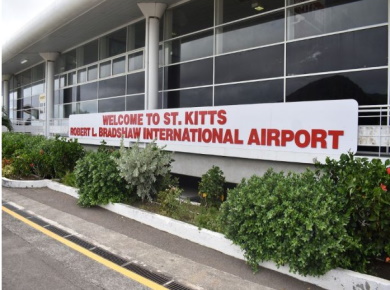
The statement gave no details as to when the 17 Nigerians had arrived here, saying only that they had “arrived on regional airline flights”.
The ministry said that the Nigeria Centre for Disease Control and Prevention has publicly indicated that Nigeria is at high risk of Ebola importation, following a dynamic risk assessment related to ongoing transmission in parts of Africa and the movement of persons through major transport hubs.
“While Nigeria has not recorded a confirmed case linked to the current outbreak, this advisory underscores the need for heightened caution and preparedness,” the ministry said.
The World Health Organization’s (WHO) has declared the Ebola outbreak in the Democratic Republic of Congo (DRC) and Uganda as a public health emergency of international concern. The WHO has also assessed the risk as high in the African region and low globally.
Ebola is a severe and often fatal viral illness and the WHO said average case fatality rate is around 50 per cent, with past outbreaks ranging from 25 to 90 per cent.
The largest Ebola outbreak on record occurred between 2014 and 2016 in West Africa, when the disease spread across Guinea, Sierra Leone and Liberia and caused more deaths than all previous outbreaks combined.
The government said it is asking all persons “to comply fully with the laws” of the Federation “to ensure the smooth and orderly implementation of this public health policy.
“We sincerely hope that this global health situation will be contained swiftly, allowing normal travel and engagement to resume as soon as possible. The Government thanks the public for its understanding and cooperation,” the Ministry of National Security added.
CMC/sg/ir/2026.