
COPENHAGEN, Norway, Mar 24, CMC – Barbados has told an international conference that fisheries crime threatens food security and undermines the stability of the oceans as it signed the Copenhagen Declaration, an international initiative against transnational organised crime in the global fishing industry.
Several Caribbean Community (CARICOM) countries are represented at the two day meeting, which ends on Friday and has been described as the largest global high-level forum. It is organised jointly by the United Nations Development Programme (UNDP) and the government of Norway.
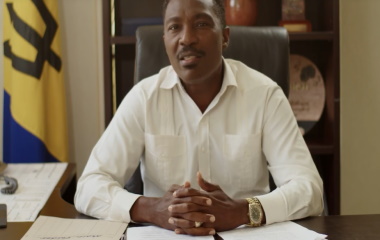
Environment and National Beautification Minister, Adrian R. Forde, told the Blue Justice conference the Barbados’ fishing industry weaves together the multi-coloured social fabric of coastal communities and forms the national identity of Barbadians.
He said this climate-sensitive sector straddles the kaleidoscope of coloured economies, and unfortunately including the black economy.
“An economy, of course, bedevilled with illegal activities, such as drug and human trafficking and unregulated and unreported fishing, which have often posed a significant challenge in the sector worldwide.
“Fisheries crime threatens food security and undermines the stability of our oceans. How are we charting the way forward towards a better future for the fishing industry? We have been working closely in Barbados with the Regional Security System to detect, stop, and fight fisheries crime,” he said, noting that throughout the whole supply chain, “we are striving to assure the legality and traceability of our fish, and execute operations to dismantle the criminal networks that are behind these crimes”.
He said Barbados has have started to outfit its vessels with state-of-the-art vessel monitoring systems (VMS) to provide comprehensive monitoring and analysis of vessel usage, compliance and behaviours with respect to marine protected areas (MPAs) and restricted-use areas.
“Traceability is a game-changer on both fronts, ensuring that fish shipments are certified as having been caught ethically, and in accordance with best practices. However, the certification cannot solely rely on the fishermen’s good faith. The development of plans and policies is, therefore, key in supporting good governance.”
He said Bridgetown is in the process of adopting the Regional Plan of Action to Prevent, Deter and Eliminate IUU Fishing so that the national conversation can be one that enhances this sector.
Forde said another notable initiative is the improvement of legislative framework to strengthen fisheries management and promote monitoring and surveillance policies, including mandating the use of our vessel monitoring devices aboard all vessels registered in Barbados.
He said the sustainable fisheries management and development suite of laws are part of a legislative reform project for Barbados’ fishing industry, adding “we are working assiduously to enact this new bill later in the year”.
The Belize-based Caribbean Regional Fisheries Mechanism (CRFM) Secretariat in a statement said with political leaders from over 35 countries and territories from six continents represented, the Blue Justice Conference 2023 is a unique opportunity to accelerate international efforts to strengthen global capacity and inter-agency cooperation for the prevention and law enforcement of fisheries crime and towards the fulfilment of theUN Sustainable Development Goals (SDCs).
CMC/ag/ir/2023