
By Eric Falt*
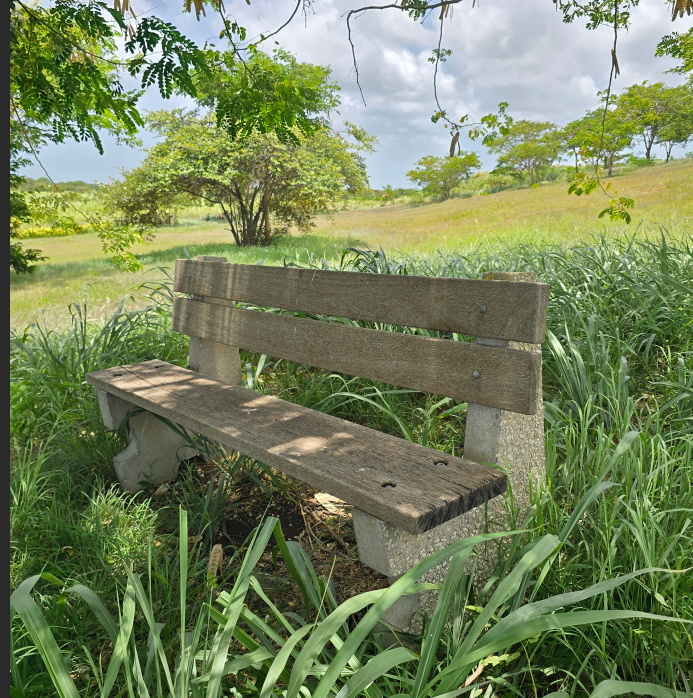
BRIDGTOWN, Barbados, Nov 28, CMC – Last year, I visited the Newton Enslaved Burial Ground in Christ Church. It was an experience that moved me deeply. Standing on this land, close to a former plantation, knowing that hundreds of enslaved African men, women and children had been laid to rest here, was a powerful reminder of the human cost of the transatlantic slave trade.
There was something particularly striking about the place. For generations, this burial ground had remained largely outside the public consciousness, despite its extraordinary historical significance. It is one of many sites across the Caribbean that bear witness to the history of enslavement, yet remain insufficiently recognized, protected or interpreted.
That is about to change.
On 28 November, Barbados will inaugurate the Ancestral Memorial to the Enslaved at Newton. This is a significant moment, not only for Barbados, but for the entire Caribbean and for all those committed to preserving the memory of one of humanity’s greatest tragedies.
The initiative is part of the ambitious R.O.A.D. (Reclaiming Our Atlantic Destiny) Programme, driven by the Government of Barbados under the visionary leadership of Prime Minister Mia Amor Mottley. It reflects a determination to confront history, reclaim the narratives of the past and give greater visibility to the experiences and contributions of those whose lives were shaped, and often destroyed, by slavery.
What places such as Newton allow us to do is bring this history closer to us. They give a physical presence to people whose lives were rarely recorded, whose names were often lost and whose stories were too frequently absent from the historical narrative. They remind us that the history of slavery is not an abstract subject or a distant chapter of the past. It is part of the history of the Caribbean, of its people, its societies and its cultural identity.
Memory is not simply about looking backwards. It is also about understanding the present and shaping the future. The consequences of enslavement did not disappear with abolition. They continue to influence our societies, our cultural identities and the inequalities that persist today. Recognizing this history is therefore an essential part of building more inclusive and equitable societies.
UNESCO has been working on these issues for more than three decades. Launched in 1994, our Routes of Enslaved Peoples programme was established precisely to break the silence surrounding the history of slavery and the transatlantic slave trade. It promotes research, education, intercultural dialogue and the preservation of places of memory, while highlighting the resistance, resilience and cultural contributions of enslaved peoples and their descendants.
Our work encompasses four complementary dimensions: understanding, remembering, preserving and transmitting.
We work to advance knowledge of this shared history through research, publications and international scientific cooperation. We connect places that bear witness to enslavement, resistance and the struggle for freedom through our Network of Places of History and Memory linked to Enslavement and the Slave Trade, launched in 2024.
We safeguard documentary heritage through our Memory of the World programme, which includes the Documentary Heritage of Enslaved Peoples of the Caribbean, preserved by the Barbados Museum and Historical Society and inscribed in the UNESCO International Register in 2003. And we help transmit the living heritage of communities whose cultural expressions, traditions and knowledge reflect generations of resilience, creativity and adaptation.
These are not separate endeavors. Together, they help ensure that the history of enslavement is not reduced to a chapter in a textbook or confined to a commemorative date. It remains visible in the places we protect, the documents we preserve, the knowledge we generate and the cultural traditions that continue to enrich Caribbean societies.
There are encouraging signs that the conversation on the Transatlantic Slave Trade is gaining momentum internationally. Over recent years, we have witnessed the emergence of new foundations, research initiatives and dedicated programmes within universities, museums and cultural institutions, particularly in Europe and North America.
Institutions that for a long time gave insufficient attention to these questions are increasingly recognizing the importance of examining their own histories, collections and connections to the transatlantic slave trade. This growing willingness to engage, to research and sometimes to confront difficult aspects of institutional history is a welcome development.
But we should not mistake this progress for the completion of the journey. The road ahead remains long and sometimes thorny. Historical injustices cannot be addressed through monuments and declarations alone. They require sustained investment in research, education, heritage protection and public dialogue, as well as an honest willingness to confront uncomfortable truths. They also require listening to the voices of Caribbean societies and communities of African descent, whose perspectives must remain central to this process.
I would hope that Newton inspires other Caribbean countries to look more closely at their own places of memory. Burial grounds, former plantations, sites of resistance, ports of departure and arrival, and other locations associated with the history of enslavement deserve greater attention. Many remain undocumented or are at risk of disappearing from public memory. They are part of a shared Caribbean heritage that deserves to be better known, protected and transmitted.
When I think back to my visit to Newton, what stays with me most is the sense of responsibility that such a place conveys. Those buried there cannot tell their own stories. It is our responsibility to ensure that they are not forgotten.
On 28 November, Barbados will take an important step in fulfilling that responsibility. The memorial will offer a place for reflection, remembrance and learning, but also for dignity and recognition.
It will remind us that these were not anonymous victims of history. They were people. They were ancestors. And their memory belongs not only to Barbados, but to all of us.
*Eric Falt, is the Director of the UNESCO Regional Office for the Caribbean.
CMC/ef/ir2026