
By Nelson A. King
SAN DIEGO, Aug 31, CMC – The California-based Haitian Bridge Alliance (HBA) is calling on the United States and the international community to strengthen measures to stop the flow of illegal firearms into Haiti, including guns originating in the US.
HBA is also condemning this month’s “horrific violence and atrocities” in Kenscoff, a mountainous commune south-east of Port-au-Prince as well as calling for armed groups in the French-speaking Caribbean Community (CARICOM) country to put down their guns, stop the violence and “allow Haiti to heal, rebuild and prosper.
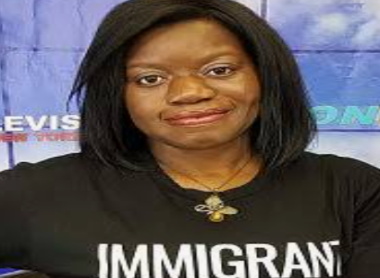
“Let’s be clear, Haiti does not manufacture weapons,” HBA Executive Director, Guerline Jozef, told the Caribbean Media Corporation (CMC), adding “no one should have to live in fear of being killed or forced to flee their home.
“Haitians deserve to be safe in their communities and able to build a future in their own country. We are deeply concerned about the safety of Haitians in Haiti and those being returned to a country where the government cannot currently guarantee their protection,” she added.
Jozef said the Haitian government must explain clearly what measures it has put in place to protect people across the country, including those being deported from the United States to Haiti.
“If the government cannot provide that protection, it must engage its US counterparts and request an immediate moratorium on deportations. The United States must halt deportation flights to Haiti and provide protection for Haitians in the United States until it is safe for people to return.”
Jozef’s call comes as a deportation flight carrying about 70 people, including US-born children, landed in the country last week.
Deportation flights to Haiti had been occurring on average once a month, but the Trump administration has ramped up its programme following the US Supreme Court’s decision authorising the government to end Haiti’s Temporary Protected Status (TPS).
More than 300,000 Haitians were enrolled in this humanitarian programme, which allowed them to live and work legally in the United States due to the situation in their country. Haitian immigrant rights organizations and other stakeholders argue that Haiti remains far too dangerous for mass returns, while the DHS maintains that the situation has improved sufficiently to allow Haitians to return.
“Haitian Bridge Alliance urges the US government to immediately halt deportations to Haiti and ensure that no person, including children, is returned to conditions where their safety cannot be assured,” Josef said.
“People should be protected, not sent into danger. This is not simply a question of immigration enforcement. We are talking about human beings being sent into a country where more than a million people have already been driven from their homes and where there are security and humanitarian crises.
“The United States cannot claim that Haiti is safe while simultaneously acknowledging the extraordinary security risks that prevent even commercial flights from operating in Port-au-Prince and telling the whole world to not travel there,” added Jozef, calling for a moratorium on deportations to Haiti.”
Josef said that these deportations are “unconscionable” and will contribute to the continued destabilisation of Haiti, while urging Washington to “immediately extend TPS for a minimum of three years by passing S. 4814 (legislation), until we are able to pass comprehensive immigration reform to permanently protect all TPS and DACA (Deferred Action for Early Childhood Arrivals) recipients across this nation”.
Jozef pointed to United Nations data that states that nearly 1.5 million Haitians are internally displaced, while 6.4 million people, more than half the country’s population, are expected to require humanitarian assistance in 2026.
“The security situation continues to deteriorate. Between March and July alone, the United Nations documented at least 613 people killed, 375 injured, and more than 18,000 displaced in violence concentrated in Cité Soleil and the Plaine du Cul-de-Sac.
“Against this backdrop, HBA warns that returning people to Haiti without adequate safeguards, resources, housing, security, and access to essential services as hospitals and other sustainable infrastructure places lives at serious risk,” said Jozef, noting that the UN figures show more than 110,000 Haitian nationals had already been forcibly returned to Haiti since January this year.
CMC/nk/ir/2026