
GEORGETOWN, Guyana, May 3, CMC – Western democratic countries Wednesday called on all stakeholders to support media freedom and promote a culture of open and honest communications in Guyana.
The statement by the heads of the United States Embassy, British and Canadian High Commission as well as the Delegation of the European Union comes as the Guyana Press Association (GPA) marks Workd Press Freedom Day with a warning that “there appears to be a creeping intolerance of media that seek answers especially from the political directorates across Guyana’s major political divide
“Today, we see renewed efforts by the sitting government to use its leverage in the State Media and its aligned privately-owned media to violate the inalienable right to freedom of association as enshrined in the United Nations Universal Declaration of Human Rights and the Constitution of Guyana.
 “The sitting government is evidently coercing those workers to engage in practices that are inimical to the Guyana Press Association at the altar of political expediency, hence the collective well-being of their organised body. There had been failed attempts in the past to do so through the partisan Union of Guyanese Journalists (UGJ),” the GPA said.
In its joint statement, the head of the diplomatic missions of the major Western countries, said the “media plays a pivotal role in society by disseminating facts for public consumption and helping citizens in Guyana stay informed, establish opinions, make informed choices, and participate meaningfully in society.
“The availability of facts and information is fundamental to exercising such rights as access to health, education, justice, and to fighting against gender and economic inequalities. The media’s charge to responsibly deliver the facts fairly and without bias to all people, benefits all of society.’
They said that in addition to providing access to facts and information, media freedom allows for transparency and accountability, important components for Guyana’s management of resources during a time of rapid growth.
“It is imperative that all stakeholders, including decision makers such as the government and the opposition, maintain a mutually respectful relationship with the media in its capacity as the fourth estate and as a vital part of democracy in action.
“This means granting the media access to public officials and to information should be the norm. Requests for public information should be honored. The 2013 Access to Information Act should be effectively implemented to empower the media to do their job.”
The diplomats said that media workers should not be restricted nor have to work under unnecessary duress or risk to their safety in order to have access to information.
“They should not face abuse, threats, intimidation or personal attacks in the execution of their duties, nor should they be expected to align with any specific idea, person, entity or political party, whether directly or anonymously.
“The media’s role is to provide objective and impartial reporting, which is essential to maintaining a healthy democracy and ensuring that all voices are heard. Therefore, it is important that employees of the media are protected and are able to carry out their duties without fear.
“We discourage the practice of selectiveness in granting access to information or to public officials under the guise of media bias,” the diplomats said, noting the progress made over the past 30 years with regards to media freedom.
“Together we must continue to develop the role that the media plays in promoting democracy, transparency and accountability and work collectively to understand the expectations of all stakeholders.
“We therefore call on the media, Government, Opposition, and all stakeholders to recognise the roles and responsibilities of the media and its benefits to the people of Guyana. We thank all journalists for their hard work, sacrifice and service to society, and we urge all stakeholders to continue supporting media freedom and promoting a culture of open and honest communications in Guyana,” the diplomats added.
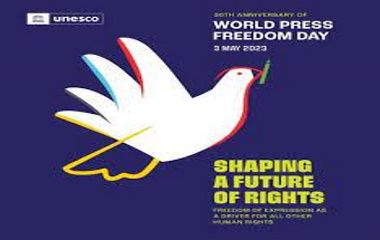
World Press Freedom is being observed under the theme “Shaping a Future of Rights: Freedom of expression as a driver for all other human rights,” and the GPA reminded the country that Freedom of Expression is one of the fundamental human rights that is enshrined in the United Nations Declaration of Human Rights which was proclaimed by the United Nations in 1948.
It said that this is is mirrored in Article 146 of Guyana’s Constitution, appreciating the “critical role the media plays in creating awareness about the other human rights and fundamental freedoms that Guyanese are entitled to”.
The GPA said it has embarked on a concerted effort at educating Guyanese and media practitioners themselves about their various roles and responsibilities.
“The integrity of journalism will continue to be under threat in Guyana not merely because of partisan interests, but because everyone who disseminates clearly partisan, and unverifiable content that passes off as interviews or discussions self-classify and hold themselves out as journalists.”
It said World Press Freedom Day is being observed at a time when there appears to be a creeping intolerance of media that seek answers especially from the political directorates across Guyana’s major political divide.
“The resort to defaming the character of journalists on a politically-aligned social media page or the expletive-laced response to a journalist are themselves a violation of Article 12 of the United Nations Declaration of Human Rights that protects people against attacks upon their honour and reputation.”.
The GPA observed that the government has embarked on a two-pronged strategy of using its leverage and pressure on media workers in the State media and sympathetic privately-owned media to take over the GPA, and if that fails to form what it sees as a parallel organisation.
“The GPA is of the clear and unambiguous position that the government’s sole interest is to control the narrative of the reality of the Guyanese media landscape locally, regionally and internationally.
“Our international partners and affiliates are being kept abreast of these efforts to derail the GPA. This is being resisted. The GPA seeks the solidarity of all freedom-loving Guyanese including civil society actors and international development stakeholders,” it added.
CMC/af/ir/2023