
GEORGETOWN, Guyana, Aug 6, CMC – Guyana says it is prepared to test for the Oropouche virus (OROV) after the Pan American Health Organization issued an epidemiology alert calling on countries to strengthen surveillance and implementation of laboratory diagnosis of the virus.
Health Minister Dr. Frank Anthony said that the National Reference Laboratory (NRL) has the reagents to test for the virus which can be spread by gnats and mosquitoes.
 “If people present with signs and symptoms and the doctors want a confirmatory diagnosis, they can send that to the Reference Lab and they have the reagents and everything to that (test). The capacity is there so we could test,” he said.
PAHO issued the call following a recent increase in cases, and spread of the disease to new areas, as well as reports of the first deaths associated with the infection and possible instances of vertical transmission.
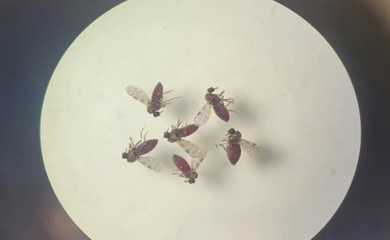
Oropouche virus disease is an arboviral disease caused by the Oropouche virus (OROV). It is transmitted to humans through midge (small fly) or mosquito bites. To date, there is no evidence of human-to-human Oropouche virus transmission.
The virus was first detected in 1955 in a febrile forest worker in a village in Trinidad and Tobago called Vega de Oropouche, near the Oropouche River. Oropouche virus is endemic to the Amazon basin.
As of the end of July, 8,078 confirmed cases of Oropouche fever were reported in five countries, namely Brazil, Bolovia, Colombia Cuba and Peru. There have been two deaths.
There are no vaccines or specific antiviral treatments for Oropouche fever and the Health Minister said that there were three suspected OROV cases but tests proved that they were not.
“It is in the region but we haven’t had a case as yet. I know that the lab had, for the year, three suspected cases but when they ran the laboratory tests, it wasn’t,” he said.
OROV symptoms include sudden onset of fever, severe headache, joint and muscle pain, and, in some cases, rash, photophobia, diplopia (double vision), nausea, vomiting and diarrhea. Symptoms may last five to seven days. While most cases recover without sequelae, in a small number of instances, complete recovery may take several weeks. Rarely, severe cases with aseptic meningitis may occur.
Experts say the symptoms make it difficult to identify readily without testing as they are similar to dengue, zika and chikungunya which may be circulating at the same time.
Dr. Anthony said that the lab test could determine specifically which virus it is.
“All those viruses are giving you similar symptoms but if you want a differentiation you can send it to the lab and they would be able to do that differentiation,” Dr Anthony said.
CMC/gt/ir/2024