
GEORGETOWN, Guyana, Nov 16, CMC – The Guyana government Monday dismissed media reports suggests that the country has returned to its previous share of production after briefly benefiting from a higher share following the recovery of earlier investments.
In a statement, the Ministry of Natural Resources said that it wanted to clarify the media claims that Guyana’s share of oil production from the Stabroek Block has returned to 12.5 per cent following the approval of the US$12.5 billion Longtail development.
“The ministry wishes to explain that the fiscal regime governing the Stabroek Block provides for the recovery of up to 75 per cent of production to cover eligible petroleum costs. The remaining production, known as profit oil, is shared equally between Guyana and the co-venturers. Guyana also receives a two per cent royalty.”
It said that when the full 75 per cent is used for cost recovery, Guyana receives 12.5 per cent of production as profit oil, in addition to its royalty. However, when recoverable costs are lower, more oil becomes available for sharing, increasing Guyana’s share.
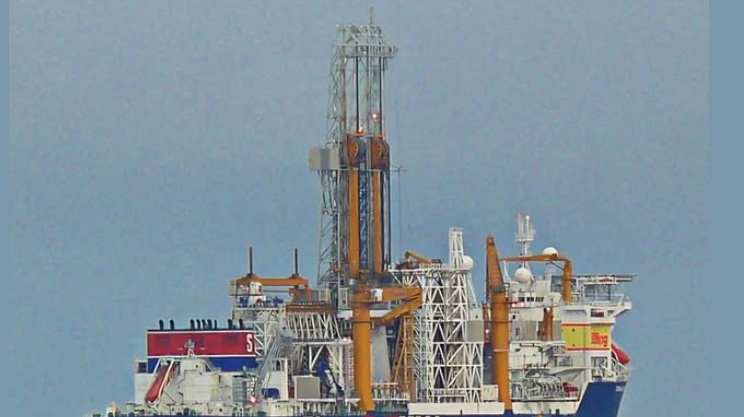
Last week, ExxonMobil announced it had made a final investment decision on the Longtail development offshore Guyana after receiving government and regulatory approvals. The US$12.5-billion project is the eighth development on the Stabroek block and is expected to start up in 2030.
Longtail opens a new phase for Stabroek. It is the block’s first development targeting non-associated gas and condensate-rich reservoirs, in the southeastern part of the block. The project will use an FPSO designed to process 1.2 Bcfd of gas and produce up to 250,000 bpd of condensate, with about 45 subsea production and injection wells. Subject to future investment decisions, market demand and the necessary infrastructure, gas from Longtail could be piped to shore.
“Guyana is home to one of the world’s most prolific energy developments, and Longtail represents the next phase in realizing the full potential of its resources,” said Dan Ammann, president of ExxonMobil Upstream Co.
“By developing these gas and condensate resources, we’re unlocking new value for Guyana while delivering advantaged energy to meet growing global demand.”
In its statement, the ministry said that it acknowledges that questions and concerns about the impact of new developments on Guyana’s share of production are reasonable, adding “under the existing agreement, costs associated with new projects can be recovered from production across the Stabroek Block. Additional expenditure can therefore reduce the share of oil available to Guyana.
“However, the approval of a new project does not mean that its entire development cost is immediately incurred or added to the cost bank for recovery.”
The ministry said Longtail was approved in 2026 and is expected to commence production in 2030. It said that the project will be developed over several years, with expenditure incurred progressively as construction and other development activities advance.
“Consequently, while spending on Longtail is expected to affect Guyana’s share of profit oil, the ministry wishes to categorically state that it will not result in a return to the 12.5 per cent which occurred prior to the significant depletion of the cost bank.”
The ministry said that it is “notable” that one newspaper “reported an invited comment from Minister of Natural Resources, Vickram Bharrat, who explicitly stated: “There will be a minimal drop in profit oil. It will not go back to 12.5%.”
It said that despite reporting the minister’s comment, the newspaper presented no clear mathematical basis to establish its opposing claim.
“The ministry reiterates that the share of production available to Guyana will fluctuate as costs are incurred and recovered. These changes must be assessed against actual recoverable expenditure rather than the maximum cost recovery limit provided for in the agreement.
“The Ministry of Natural Resources remains committed to transparency and accountability in the management of Guyana’s petroleum resources. It will continue to monitor recoverable costs, provide information on Guyana’s share of production and revenues and clarify matters of public interest to ensure that citizens are accurately informed about the management of the country’s oil and gas sector.”
CMC/gt/ir/2026