
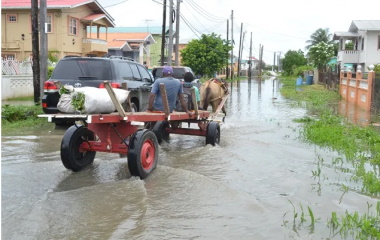
GEORGETOWN, Guyana, Jul 10, CMC – Flood waters have significantly receded in several communities allowing for several residents, who were being housed at shelters across the country, to begin returning to their homes.
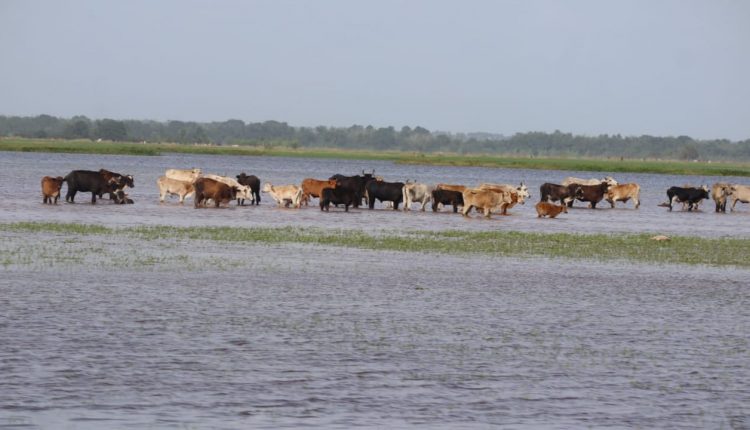 According to the latest update all of the persons who were being housed at the Tabatinga shelter in Region Nine have returned home, while 69 persons in Region 10 have also left.
As of Friday, there are now 184 persons staying in shelters in Regions Two, Region Five and Region Ten.
This is a marked reduction of the 257 persons who were being housed in 12 shelters as of July 2.
Of those remaining in the shelters there are 30 persons at the Barama Building in Karawab, Region Two, seven persons at the Mortice Primary HM Building in Region Five, and 147 persons across shelters in Region Ten.
There are a total of 91 females and 93 males in those shelters.
Meanwhile, water has receded from most of the coastal Regions including Regions One, two, Three, and Four, with no new reports of flooding. However Regional officials in each of the respective regions continue to monitor the situation.
Water has also significantly decreased in Regions Seven and Eight, where most communities are in a safe state.
However, there still remains significant flooding in Regions Five, Six, and Ten. Though some areas in Region Nine have improved there are some new reports of rising levels in the river.
Last month, the Caribbean Disaster Emergency Management Agency (CDEMA) officially deployed five Detailed Damage Sectoral Assessment (DDSA) teams to Guyana to report on sectors affected by escalated flooding.
The Civil Defence Commission (CDC) then called on CDEMA to prepare a damage and loss estimate report of the affected regions.
Flooding in Guyana commenced around mid-May, following extreme rainfall associated with the Intertropical Conversion Zone (ITCZ) and low-level troughs affecting Northern and Southern Guyana).
CMC/gt/kb/2021