
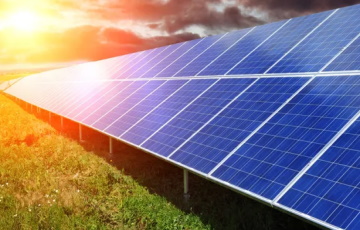
GEORGETOWN, Guyana, Jun 23, CMC – Government on Wednesday signed an agreement with Norway and the Inter-American Development Bank (IDB) to finance the country’s largest solar project which is set to benefit thousands of Guyanese.
The project supports and fits hand-in-hand with Guyana’s low-carbon ambitions under the new and expanded Low Carbon Development Strategy (LCDS) 2030.
According to Norway’s International Climate and Forest Initiative (NICIF), Guyana will use funds received for its low deforestation rates to finance eight large-scale solar energy projects.
In total, the projects will provide 27,000 households with cheap, clean energy – benefiting approximately 70,000 people.
The Guyana Utility-Scale Solar Photovoltaic Programme (GUYSOL) will invest in eight utility-scale, photovoltaic solar projects totalling 33MWp, with associated 34MWh energy storage systems distributed across three areas in Guyana. The programme will be implemented by Guyana and the IDB.
Prime Minister Mark Phillips reminded that back in 2009, Guyana launched one of the world’s first low carbon development strategies, as it set out to show that it is possible to maintain forests while also creating prosperity and opportunities for our people to thrive.
“Norway has been a steadfast partner in our work to find international solutions that support this objective. The world needs far more collaborations like ours – so I hope that today’s announcement will motivate others to recognise that progress is possible,” he said on Wednesday.
Norway’s Minister of Climate and Environment, Espen Barth Eide, was impressed by “Guyana’s continued leadership to protect the country’s vital rainforests, and welcomed their decision to use some of the payments for maintaining low deforestation to scale up solar energy generation”.
Guyana boasts unrivalled forest conservation credentials. For context, the country’s forest is over 18 million hectares – the size of England and Scotland combined – and stores over 21 gigatons of carbon.
Guyana has also successfully maintained 85 per cent of its forest cover, with a deforestation rate that is 90 per cent lower than other tropical countries. Its forests also store 18 per cent of the world’s carbon, and contain 2.4 per cent of known plant species and four per cent of all known animal species.
CMC/ed/2022