
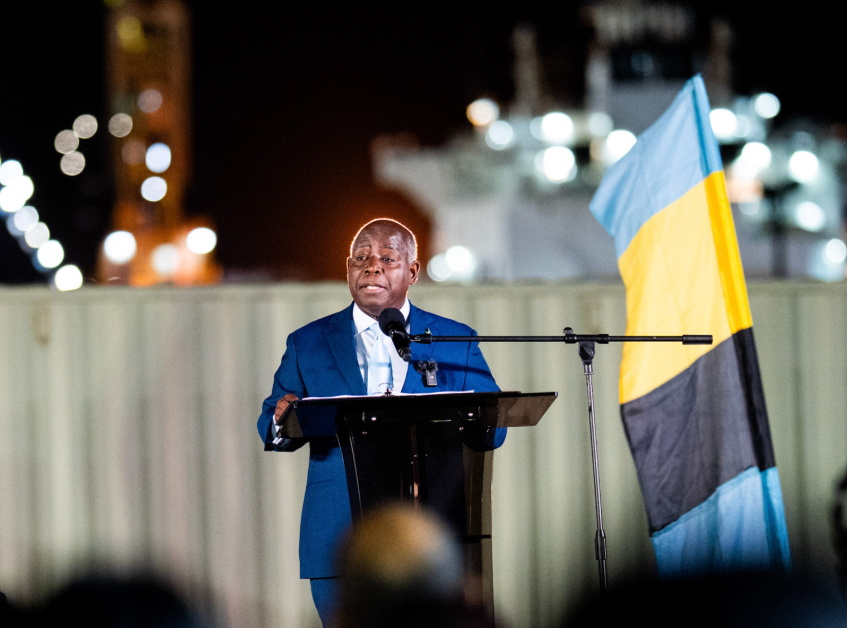
NASSAU, Bahamas, Oct 23, CMC – Prime Minister Philip Davis has announced plans to establish a single, accountable governance framework for the entire Grand Bahama, marking a proposed change in how the island is administered, regulated and positioned for future development.
Prime Minister Davis said his government’s intention is to replace Freeport’s existing system of divided public governance with a modern framework that would apply consistently across the island, while protecting lawful interests, maintaining a strong role for private investment and giving Grand Bahamians a direct voice in shaping the transition.
“Whether we change is settled. How we change is yours to shape,” Prime Minister Davis said, with the announcement coinciding with the publication of a Green Paper entitled “Grand Bahama: A Framework for Stability and Growth” setting out the government’s proposals and opens a six-month period of public consultation beginning on November 1 this year.
At the centre of the proposed reforms is a fundamental change to the way Grand Bahama is governed. Currently, residents and businesses within the Freeport Port Area operate under both national laws and a separate system of licences, approvals and bye-laws administered by the Grand Bahama Port Authority (GBPA).
The government is proposing to bring public administration and regulation under one transparent and accountable framework for the entire island, ensuring greater consistency for residents, businesses and investors, whether they are located within the Port Area or in East or West Grand Bahama.
The Green Paper outlines several proposals to support that transition, including the establishment of a government-led Grand Bahama Development Council to coordinate development across the island.
It also proposes a comprehensive review of the existing Agreement, directed by the Attorney General, and the development of a modern legislative framework, including a proposed Grand Bahama Development Act.
A key component of the proposed approach is the extension of investment concessions across Grand Bahama, with the possibility of enhanced incentives outside the Port Area to encourage economic activity and attract development to communities in East and West Grand Bahama.
Prime Minister Davis said the transition would be undertaken lawfully and through Parliament, with appropriate protections for existing rights and obligations.
The authorities said the publication of the Green Paper does not itself change the legal position of residents, businesses, property owners or licensees. The government has committed to identifying, recording and respecting rights lawfully held, and has stated that no changes will be applied retrospectively.
Prime Minister Davis is also calling on the Grand Bahama Port Authority and other stakeholders to participate constructively in the reform process.
“I would rather build this future with you than around you,” Davis said.
The public consultation will provide residents, businesses, community organizations and other stakeholders with an opportunity to review the proposals and contribute to the development of the new framework.
Public meetings will be held in Freeport, East Grand Bahama and West Grand Bahama to ensure that communities throughout the island have an opportunity to participate.
Following the consultation period, the Government is targeting the publication of a White Paper on 1 July 2027, with legislation expected to be brought forward for passage during the first quarter of 2028.
The government said that the consultation will help inform how the proposed framework is designed and implemented, including the arrangements needed to ensure an orderly transition.
CMC/jh/ir/2026