
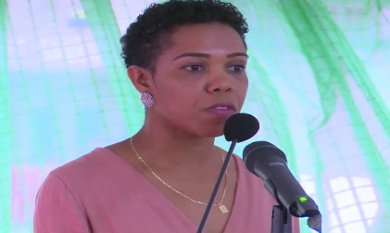
ROSEAU, Dominica, Nov 21, CMC – The World Bank Operations Manager for the Caribbean, E Gale Richardson, says she is pleased with the progress being made under a World Bank- government of Dominica housing recovery project.
“Since the project began Dominica’s housing sector has transformed dramatically, demonstrating resilience, innovation and capacity delivering homes far beyond those finance by this initiative,” she told a ceremony on Thursday where 69 families became the latest recipients of new homes under the project.
The World Bank Housing Recovery Project for Dominica aims to rebuild homes and improve the application of resilient building practices after Hurricane Maria struck the island in 2017, as a powerful Category 5 storm with winds exceeding 277 km/h. The hurricane caused widespread devastation, destroying about 95 per cent of the housing stock and inflicting damages and losses equivalent to 226 per cent of the country’s gross domestic product (GDP).
The project includes support for housing reconstruction, capacity building for housing recovery systems, and project management. It has a budget of approximately US$40 million and uses funding from the International Development Association (IDA).
Richardson, said the new homes represent a big achievement for Dominica and that the progress is “even more impressive if you view it against the major global and local challenges of recent years.
‘We had the COVID-19 pandemic, we had worldwide shortages and price escalations, we had successive tropical storms. Yet, despite these obstacles, Dominica has constructed over 300 homes under the housing recovery project, an achievement that reflects the strength and determination of the country and its people,” Richardson told the ceremony.
Housing Minister Mellissa Skerrit says the government’s housing expansion programme will provide housing to many more Dominicans, noting also that the housing recovery programme was special as Dominicans were empowered during the construction of homes.
“The housing recovery project is the first home owner driven initiative in the entire Caribbean. This means that the beneficiaries were fully involved in the process, hiring their own contractors…in some cases, purchasing their own material…and even learning to build their houses.
“It was a community energy at its best. All contractors were strictly local ensuring that every single dollar stayed right here and circulated within the communities,” she said, acknowledging that there were challenges.
“We battled the rising global costs, we changed our cap many times from 50,000 to 170,000 (EC dollars)in the end because they were material shortages, increased prices and the realities of rebuilding in a rugged mountainous island…are difficult, but still we pressed on,” she said.
She said many of the homeowners would have also been disqualified, not because they did not need a home, but they lacked the necessary land title documents, which the government had to provide funding in order to acquire them in the end.
Acting Prime Minister and Minister for Culture and Community Development, Gretta Roberts, defended government’s decision to investing in free housing Dominicans.
“The answer is simple. We live in one of the most disaster prone regions on earth. Climate change has made hurricane more intense, more unpredictable and more destructive. The storms of today are not the storms of 20 years ago and it is the poorest and most vulnerable who suffer the most when disasters strike.
“This government,…has taken the firm decision that no Dominican family should be left to face the next hurricane with the same fragility that existed for 2017. When we say resilient houses,. we mean housing which can weather the storm that we know will come, homes that protect lives, homes that reduce the need for emergency shelters, homes that save families of the trauma of staring all over again,” she added.
So far, more than 382 homes have been constructed under the project.
CMC/gr/ir/2025