
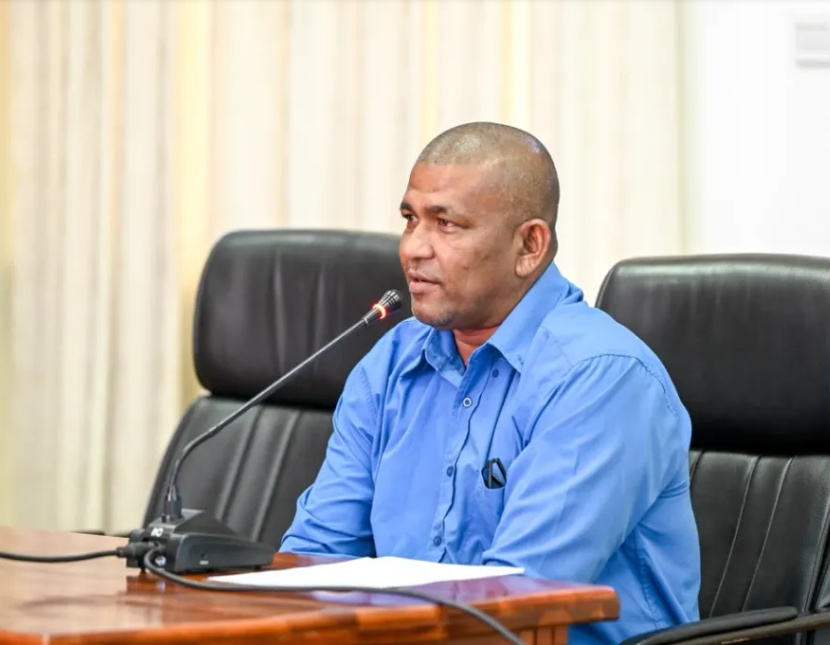
GEORGETOWN, Guyana, Nov 11, CMC – The Commission of Inquiry into the July 18 sinking of the MV Barima that resulted in the loss of more than 100 lives, has resumed following a two week break with its chairman, Justice Godfrey Smith insisting that the decision by the United States to revoke his visa would not overshadow the Commission’s work.
On its resumption, an inspector with the Maritime Administration Department (MARAD), Christopher Bailey, said that his November 17, 2025 inspection of the MV Barima involved checklist-based checks, equipment testing and the recording of deficiencies.
He reported no visible damage in the areas he examined, but could not confirm whether the deficiencies identified were corrected before the ferry sank on July 18.
The 87-year-old state-owned passenger and cargo ferry MV Barima capsized and sank off the coast of Guyana on July 18, 2026. The ferry was travelling from Georgetown to Port Kaituma and the terms of reference of the Commission include the cause of the incident, whether maritime laws were followed, and how the search and rescue was carried out.
Prime Minister Mark Phillips had said that despite the official manifest indicating that 116 passengers and a crew of 17 had been on board the vessel, the authorities believe that 179 people including the crew members were on the vessel when it capsized after being hit by a large wave.
The legal framework for the inspection came under scrutiny, with Bailey identifying the Coasting and Passenger Trade Regulations, made under the Shipping Casualties (Investigation and Prevention) Act, as his reference.
He said he understood the state-owned ferry to be exempt from mandatory inspection, but that MARAD nevertheless conducted the exercise as part of its safety responsibilities.
Commissioners questioned which requirements applied to the vessel and how those related to MARAD’s inspection checklist. Bailey explained that the checklist included equipment beyond what he understood the regulations to require.
Bailey said he had been with MARAD for three months when he inspected the ferry and that his examination covered the bridge, passenger areas, main deck and engine room.
The inspection recorded 16 deficiencies with Bailey indicating that the ferry was docked and not operating when he conducted the inspection. He submitted his report to MARAD’s Director of Safety, and it was marked as seen on November 19.
Among his findings were life rafts several years overdue for servicing and an Emergency Position-Indicating Radio Beacon with an expired battery. He explained that the rafts could not be opened during his inspection because their examination and servicing required a specialised facility.
Approximately 200 to 250 life jackets were observed in the passenger area. Bailey testified that he took them all down and inspected them. Bailey also reported that the radar, Global Positioning System and Very High Frequency radio were operational.He said paper charts were present, although no Automatic Identification System equipment was fitted.
Regarding the vessel’s physical condition, he said he saw no visible leaks, abrasions or damage in the areas examined and assessed its condition as fair. That assessment, he explained, rested on visual observations rather than a detailed structural survey.
“The inspection is very, very important to make sure that the ship is running in order,” Bailey said, explaining that an outside examination could identify matters overlooked by crew members working aboard daily.
In the Barima’s case, however, Bailey said he received no instruction to undertake a further inspection following his November report and his evidence did not establish whether the deficiencies he recorded had been corrected before the sinking.
Meanwhile, fisherman Haresh Singh told the Commission how he reached a life raft carrying 11 survivors including children.
Singh was among the first responders in the rescue operation following the tragedy, and in his recount of the desperate effort to bring survivors to safety, and his later search for the sunken ferry, said he was already in bed when he received a call from Regional Chairman Devin Mohan and Minister within the Ministry of Public Works, Mandalall Ramraj.
He said he and his brother own two fishing boats and a fisherman known as “Spanish” joined his team and three boats departed the Hampton Court koker.
Singh testified that the water was rough and dark, with waves as high as a lamppost, which told him the tide was extremely strong. Flares in the sky guided the rescuers to four life rafts. He said the first three were empty, while the fourth held 11 survivors, among them children.
Singh described the survivors as being in bad shape. A woman said her child slipped away, and a male survivor said two of his children were within his grasp before the pull of the water proved too strong.
Singh said he was emotionally affected hearing the survivors speak about losing their loved ones.
“The first thing I do when I get them in the boat, I make sure I take a picture,” he said and despite poor wifi connection, he sent the photos to the regional chairman as the rescue unfolded.
CMC/gt/ir/2026