
BRUSSELS, Mar 11, CMC -The Brussels-based World Customs Organization (WCO) says it will continue to work its members and partners to enhance border security in the Caribbean after indicating that its collaboration and intelligence sharing had prevented 119 firearms and 332 firearms parts from reaching organized crime groups in the Caribbean.
The WCO, which represents 187 Customs administrations across the globe, said that for the second consecutive year, it lead Operation CALYPSO 2 in response to the growing threat posed by firearms trafficking and drug smuggling in the Caribbean.
“Over the course of just three weeks, the operation led to significant seizures of illicit firearms and narcotics, disrupting organized criminal networks and illicit trafficking activities, while enhancing regional safety and security.”
The operation was carried out between November 24 to December 12 last year and was aimed at strengthening Customs’ role in border security through enhanced collaboration with national, regional, and international law enforcement partners.
It said key objectives included identifying illicit trafficking routes and activities, improving intelligence sharing, and reinforcing coordinated enforcement efforts across the region.
“Operation CALYPSO shows the concrete impact Customs delivers every day to protect society. Through coordinated regional and international action, Customs officers intercepted illicit firearms and drugs before they could reach Caribbean communities, disrupting organized crime at its source,” said WCO Secretary General, Ian Saunders.
“The WCO is unwavering in its commitment to protecting society, securing global supply chains, strengthening cross-border enforcement, and advancing the Caribbean Firearms Roadmap in close partnership with members and fellow international organizations,” Saunders added.
The WCO said that a total of 22 countries, including 18 WCO members, were involved, as well as the Caribbean Joint Intelligence Office (JIO).
It said that the operation was conducted in partnership with the Trinidad-based Caribbean Community (CARICOM) Implementation Agency for Crime and Security (IMPACS), with support from INTERPOL, the European-Union funded Seaport Cooperation Project (SEACOP), the Barbados-based Regional Security System (RSS), and the United Nations Office on Drugs and Crime (UNODC).
“Operation CALYPSO 2 is the most successful operation carried out within the framework of WCO’s Project Bolt to date. Participants reported 402 instances of prohibited or restricted items. Among the 119 small arms and light weapons seized there were 21 assault rifles, in comparison to six being seized in last year’s Operation Calypso,” the WCO said.
It said in the British Virgin Islands, the authorities seized 772 kg of cocaine: after stopping an inter-island commercial vessel that had travelled from Trinidad, calling in at Saint Kitts and Nevis, before being intercepted at sea as it approached the British Virgin Islands.
The vessel regularly runs between the Eastern Caribbean islands moving commercial cargo. The WCO said that this activity resulted in six arrests and a significant disruption to transnational organized crime activity in the region.
In St. Lucia, the authorities reported that several weapons were seized including weapons being broken down in a freight consignment.
“The broken-down weapons were found concealed in baby-related items. The detection of auto-sears was notable as these parts enable the conversion of semi-automatic pistols into automatic weapons, which are popular with criminal armed gangs.”
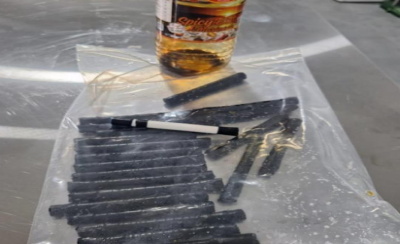
The WCO said that the cooperation and partnerships between its members prevented illicit drugs from reaching foreign destinations adding that “information sharing led to the identification of liquid cocaine moving regionally to France as well as preventing cannabis from moving into the Caribbean”.
It said that “strong regional cooperation and partnerships underpin success Operation Calypso 2 highlighted the value of international cooperation in tackling transnational crime.
“Customs and partner agencies collaborated on intelligence sharing, coordinated enforcement actions, and conducted joint risk assessments in real time. Not only did Customs authorities work together throughout the operations; this initiative has led to an increase and ongoing information sharing across the region,” the WCO added.
CMC/aj/ir/2026