
By Ivan Cairo
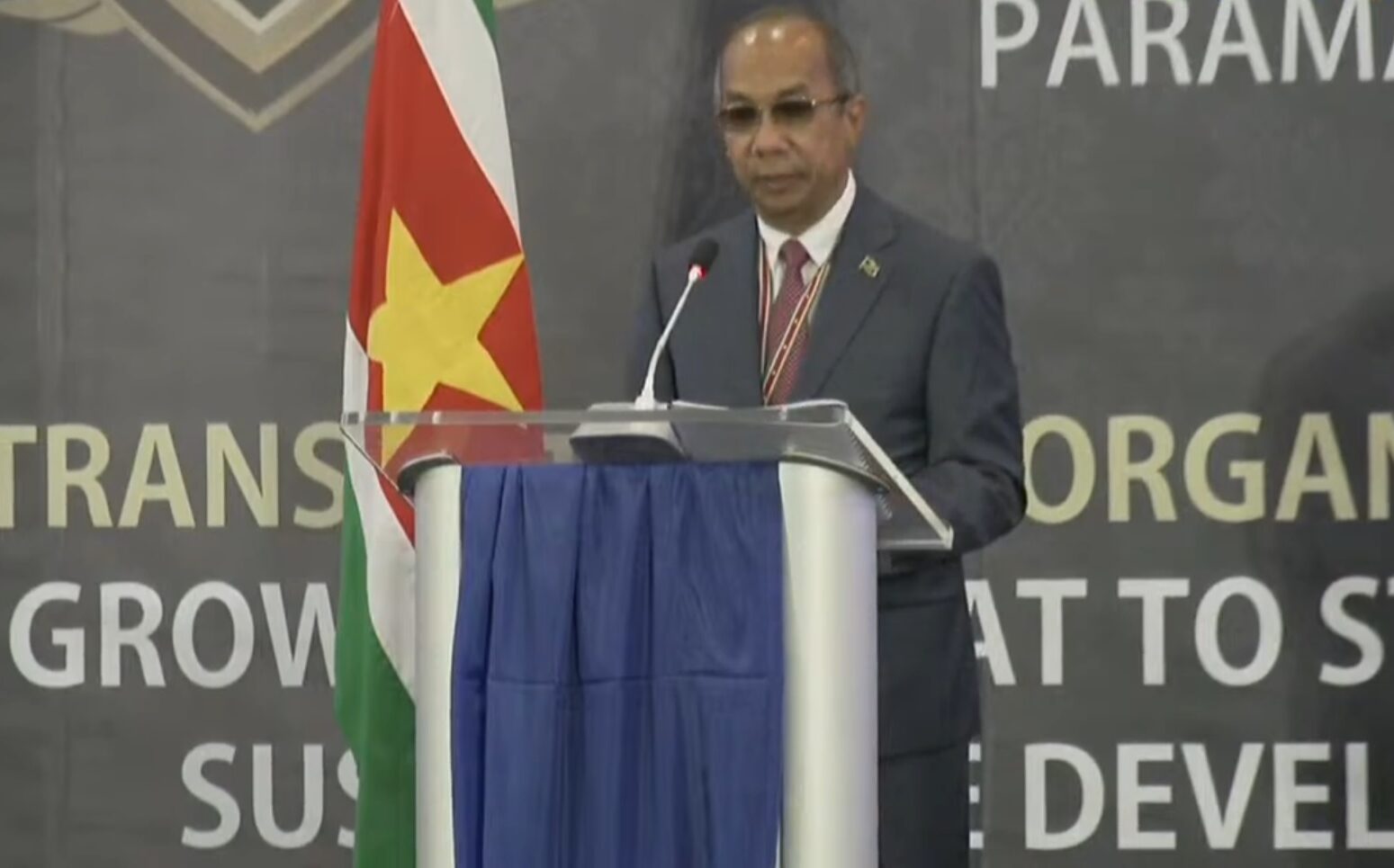
PARAMARIBO, Suriname, Apr 21, CMC – A renewed commitment is needed to improve regional and international security and strengthen the fight against transnational crime, chairman of CARICOM’s Council for National Security and Law Enforcement (CONSLE) Horace Chang said as the High-Level Security Conference (HLSC) began here on Thursday.
Chang, who is Jamaica’s Minister of National Security, said countries must continue to take steps to take profit out of trans-border criminal activities.
“We need renewed commitment to strengthen land, air, and sea border security through data collection tools, control systems that enhance coordination and continued efforts to deepen regional and sub-regional and international cooperation,” he contended, adding that implementation of recommendations of the Financial Action Task Force (FATF) and collaboration with strategic partners like the International Criminal Police Organization (Interpol) are crucial in this effort.
The two-day HLSC, an initiative of the Surinamese government and which has as its theme ‘Transnational crime: a threat to stability and sustainable development’, seeks to address the challenges and security threats arising from transnational organized crime which endanger and jeopardize the stability, peace and sustainable development, wealth, and economies.
According to Chang, inter-regional, inter-agency and international cooperation as well as public-private partnerships can help counter transnational organized crime.
“We need to agree to definite action on the implementation of international legal framework promoting maritime security,” he said.
The CONSLE chairman said transnational organized crime poses a global security threat and “impacts our respective regions”.
He identified trafficking in firearms, drug trafficking, human trafficking and smuggling of migrants, terrorism, cyber-attacks, illegal mining, illegal unreported and unregulated fishing, piracy, and intentional unlawful damage to the marine environment as significant risks to the sustainable development agenda.
Additionally, he noted, CARICOM had recognized the linkages between transnational organized crime and violence that pose a serious threat to national development, international peace and security.
He further pointed out that the nature of the terrain of the Guianas – Guyana, Suriname and French Guiana – and the porous borders made those countries susceptible to transnational organized crime.
Chang, who is also Jamaica’s Deputy Prime Minister, added that the Caribbean’s location between North America and South America made it attractive to transnational criminal organizations as a strategic transshipment point.
“We, therefore, have to collaborate and be alert at all times,” he said, adding that countries must leverage border security systems to fully utilize passenger information and advanced passenger information in identifying persons of interest through risk assessment and pre-screening.
Chang also said there is a need to leverage technology, in particular the use of satellite imagery.
He urged all nations to strengthen existing frameworks.
Among the Caribbean’s emergent security concerns identified by Chang was cybercrime which he said is growing in the context of the COVID-19 pandemic, through online fraud, extortion, online child sexual abuse targeting vulnerable individuals, as well as through ransomware that compromises financial systems, hospitals, and other vital systems.
He noted that criminals have also taken advantage of remote working and tele business which have grown in the COVID-19 environment.
Chang pointed to the advanced credit fraud in Jamaica, which “is essentially extorting” retired citizens while bringing illicit funding as well as firearms into the country.
The Jamaican official said the region has the opportunity to address its security challenges, noting that some progress has been made in several areas.
“We have made progress over the years and continue to do so. In 2012, Guyana and Suriname were the first in the Caribbean to join the container control programme to improve port security and prevent the illegal use of containers in drug trafficking and transnational criminal activities. Those countries again are taking steps to implement an anti-crime pact across the region. We commend them,” he said.
The HLSC which ends on Friday will provide an opportunity to illustrate past and ongoing activities as well as methodologies and best practices, to develop and strengthen the institutions, entities, and capacity of groups and people within the region, especially the Guyana Shield, one of the regions of highest biodiversity in the world, encompassing French Guiana, Suriname, Guyana, Venezuela, and parts of Colombia and Brazil.
In addition to Suriname, countries such as Jamaica, Barbados, France, the United States, the United Kingdom, the Netherlands, Curaçao, Guyana, Brazil and Canada, as well as organizations such as the Organization of American States (OAS) and Interpol are participating in the conference.
CMC/ic/ed/2022