
GEORGETOWN, Guyana, Feb 16, CMC – National security and law enforcement officials are meeting on Wednesday amidst concerns that a leader of a Caribbean Community (CARICOM) country could have been assassinated in his private residence among issues to be examined as the region is told it needs to advance the fight against crime and violence.
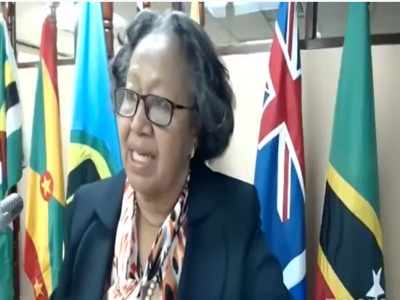
CARICOM Secretary General, Dr. Carla Barnett, addressing the 23rd meeting of the Council for National Security and Law Enforcement (CONSLE) told the virtual meeting that as the region continues to the battle with the coronavirus (COVID-19) pandemic and all its variants, ”there is an urgent need to strengthen cooperation among member states”.
The meeting is being chaired by Jamaica’s National Security Minister, Dr. Horace Chang, and The CARICOM Secretary General said that “there are many burning issues in the security arena that need our attention.
“Foremost in my mind are the situation in our sister CARICOM member state Haiti, Trafficking in Persons/Human Smuggling and Cyber Security.
“That a sitting President of a CARICOM member state could be assassinated, and in the confines of his own home, was unimaginable until it happened,” Barnett said.
“This, in addition to on-going gang violence, breakdown in democracy, the rule of law and good governance, makes it incumbent upon us as a group to consider offering support for developing a strategy, in collaboration with the people of Haiti and with the support of the international community, to help to lift that Member State out of its current state of crisis”
Barnett said that this is urgent, given the “dangerous and often fatal risks that Haitians take every day to leave their country frequently exposing themselves to heartless traffickers”
She said Trafficking in Persons and Human Smuggling remain a challenge in all parts of the globe and “in this very region, we have learnt of vessels with dead bodies being discovered which, in itself, points to another issue on our agenda – that of the need for enhanced maritime security”.
Barnett said that Trafficking in Persons results in the most vulnerable populations being exploited and pushed into modern day slavery, forced labour, sexual servitude, forced marriage and financial bondage.
She said according to the International Labour Organisation (ILO), the majority of trafficked individuals are trapped in forced labour with 25 per cent of them being children and 75 per cent women and girls. “Sadly, the women and girls who are disproportionately affected by forced labour, account for 99 per cent of victims in the commercial sex industry.”
Barnett said effectively identifying and combatting human trafficking and smuggling of migrants, requires a holistic approach, and greater collaboration among law enforcement and security agencies, as well as among governments, civil society organisations and international agencies.
“We are all well aware that cyber security has become much more prevalent as a consequence of the increased use of ICT (Information Communications Technology) that has become necessary as a result of the COVID-19 pandemic.”
Barnett said the CARICOM Implementation Agency for Crime and Security (CARICOM IMPACS) has reported that the 15-member regional grouping has experienced an increase in the reports of cybercrimes as businesses and schools are now virtual or blended.
“In this regard and in addition to training for law enforcement officers, prosecutors and magistrates on cybercrime investigations and cybersecurity being conducted by the Agency, work is also being undertaken with regard to legislation.
“ A regional cybercrime policy and legislative guidance document was developed with the objective of facilitating the establishment of harmonised policy and legislation within member states, in keeping with the objectives of the CARICOM Cyber Security and Cybercrime Action Plan.”
Barnett said that in light of the challenges facing the region and the work already being undertaken, it is especially important that the protocol to incorporate CONSLE as an organ of the Community and IMPACS as an Institution be fully signed and ratified.
She said a revised version of the protocol which has been pending since March 2009, was adopted at CARICOM leaders at their inter-sessional summit held in Belize in February 2016.
“I sincerely hope therefore, that the member states which have yet to sign and/or ratify the Protocol make it a matter of priority, as soon as possible, in order to allow for its entry into force. Belize is preparing to host yet another Inter-Sessional Meeting of the Conference in a couple of weeks so what a perfect opportunity”.
CMC/gt/ir/2022