
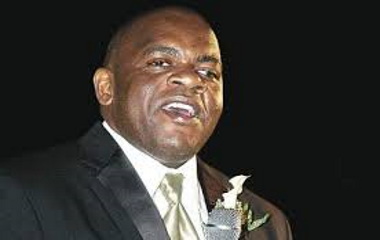
GEORGETOWN, Guyana, Feb 14, CMC – The Caribbean Community (CARICOM) Special Rapporteur on Disability, Dr. Floyd Morris, has welcomed the Jamaica’s decision to implement its Disabilities Act effective Monday.
“Persons with disabilities are among the most marginalized in the Jamaican society and legislation is needed to protect these citizens and to get them to participate in mainstream society,” Morris said, adding “this piece of legislation is most needed to aid in the transformation and empowerment of the estimated 450,000 persons with disabilities living in Jamaica”.
Morris, who is also a member of the United Nations Committee on the Rights of Persons with Disabilities, is also hailing the creation of the Disability Rights Tribunal (DRT) as a unique feature of the legislation.
“The DRT is a unique feature of the Jamaican legislation and is likely to bring about justice and progressive action for persons with disabilities whose rights and freedoms have been violated,” said Morris, the director of the University of the West Indies Centre for Disabilities Studies.
He notes that the legislation will give protection to persons with disabilities in areas such as education, employment, health care, housing, public transportation and participation in politics and public life.
“The coming into effect of this legislation in Jamaica is one of the obligations under the Convention on the Rights of Persons with Disabilities (CRPD) whereby States Parties that sign and ratify this global treaty are duty bound to formulate and implement legislation to protect the rights and dignity of persons with disabilities and therefore, this effective date is most welcomed.”
He said that the implementation of the legislation is not only a fulfilment of Jamaica’s regional and international commitments to persons with disabilities, adding that Jamaica’s legislation fits within the principles of the Declaration of Petion Ville which was agreed to by CARICOM countries in 2013.
The Declaration provides a roadmap to guide regional governments on programmes and policies for persons with disabilities and legislation to protect persons with disabilities is one of the requirements.
Jamaica is now one of six countries within the Caribbean to establish specific legislation for persons with disabilities. The country ranks third in the Caribbean on the most recently completed Regional Disability Index, completed by the UWI Centre for Disability Studies.
Last weekend, the Chief Technical Director in the Ministry of Labour and Social Security Dione Jennings, urged Jamaicans to wear royal blue to celebrate the implementation of the legislation in Monday.
She said that the ground-breaking legislation will “promote and protect as well as enhance the full and equal enjoyment of persons with disabilities (PWDs), in terms of privileges and benefits that they can attain, on an equal basis, with other persons in the society.
“The Disabilities Act highlights that we as Jamaicans should ensure and accept, as well as reinforce, that persons with disabilities have the same fundamental rights as any other person in the society,” she said, adding “it will ensure that their rights are protected, that there is respect for their dignity, and prohibits and prevents discrimination against persons with disabilities”.
The Act was passed in Parliament in October 2014, and the Regulations affirmed by the House of Representatives in October 2021.
Jennings noted that it will give more authority to the Jamaica Council for Persons with Disabilities (JCPD), which will no longer be a department of the Ministry, but a body corporate, functioning under the Public Bodies Management Accountability Act.
State Minister in the Ministry of Culture, Gender, Entertainment and Sport, Alando Terrelonge, is encouraging more PWDs to register with the JCPD to access certain benefits.
Terrelonge, who is Member of Parliament for East Central St. Catherine, noted that there are some 500,000 Jamaicans living with disabilities, but less than 40,000 are registered with the JCPD.
CMC/af/ir/2022