
CASTRIES, St. Lucia, Aug 25, CMC – The Organisation of Eastern Caribbean States (OECS) Commission says it has signed a grant agreement with Direct Relief, the humanitarian aid organization active in more than 80 countries, marking the beginning of a significant partnership aimed at enhancing climate health resilience in the nine English-speaking countries.
Direct Relief, which says it has gained wide recognition from independent charity rating agencies and watchdogs, carries out its mission to improve the health and lives of people affected by poverty or emergencies, without regard to politics, religion, or ability to pay.
It works in the US and internationally to expand access to medicine and healthcare by equipping doctors and nurses with lifesaving medical resources.
St. Lucia-based OECS Commission said that through this agreement, Direct Relief has “generously committed US$3,000,000 to fund the new Enhancing Health Infrastructure and Resilience in OECS member states (EHR) project.
“The EHR Project will address critical gaps in health infrastructure identified by OECS member states, focusing on priority areas specific to each nation’s needs. By doing so, the project aims to bolster the capacity at both national and regional levels to manage and mitigate the impacts of climate change and other hazards. It will also enhance financial and coordination mechanisms to respond effectively to disasters and outbreaks,” the Commission said in a statement.
It said since the passage of Hurricane Beryl on July 1 this year, it has been engaged in mobilizing resources to support affected member states in their response, recovery and rebuilding efforts.
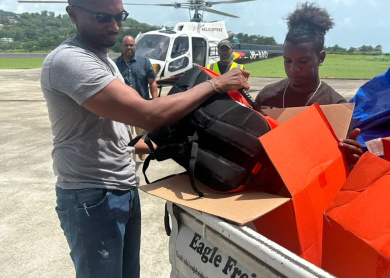
The OECS-Pooled Procurement Services (PPS) was able to provide two pallets of Hurricane Prepared Modules and 15 Emergency Medical Packs, courtesy of Direct Relief. The new EHR project, which will run over 18 months, is both timely and relevant, with anticipated short, medium and long-term impacts, the Commission said.
“It aligns with the OECS Commission’s mandate to promote regional integration in the OECS region and its strategic priorities. Additionally, direct beneficiaries of the EHR Project include disaster response teams, healthcare facilities, and workers.
“The project is expected to have positive spillover effects on community members, government agencies, and partner organisations in the implementing countries, which include Antigua and Barbuda, Dominica, Grenada, Montserrat, St. Kitts-Nevis, St. Lucia, St. Vincent and the Grenadines, Anguilla and the British Virgin Islands.”
The Commission said the EHR project is poised to make a substantial contribution to the OECS Commission’s Strategic Priority 4, that is building resilience by strengthening communities, systems, infrastructure and people.
“This involves improving disaster preparedness and response, reducing vulnerabilities, and enhancing the capacity of health systems. By focusing on Strategic Priority 4, the project aims to strengthen access to and investment in health services thereby reducing health disparities, particularly during times of crisis.”
The Commission said that through this grant agreement with Direct Relief, the HER project enables OECS Member States to be better equipped to handle health emergencies and crises.
“It ensures that vulnerable populations continue to receive care even during challenging times, and contributes to the development of more sustainable healthcare systems within OECS member states,” the Commission added.
CMC/af/nb/2024.