
BELMOPAN, Belize, Sept 2, CMC – Prime Minister John Briceño and the Executive Vice President of the Inter-American Development Bank (IDB), Jordan Schwartz, have signed multi-million dollar loan contracts and related non-reimbursable grant agreements to finance two new programmes aimed at enhancing healthcare services and promoting sustainable urban development in Belize.
The signing took place during the Third High-Level Dialogue of the Regional Climate Change Platform of Finance and Economy Ministries in San Pedro.
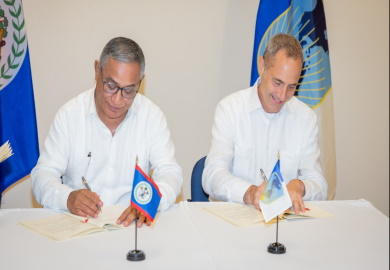 The programmes signed were approved by the IDB board of directors in May and June this year and by the National Assembly of Belize in July 2024.
“The IDB is proud to support Belize in two critical sectors, improving the efficiency, quality, and access of health care services and enhancing an infrastructure and urban development program that will boost tourism and economic growth,” Jordan Schwartz said.
Briceño said the new agreements are important steps in his government’s plan to develop Belize.
“Investments in healthcare and urban development will not only enhance the quality of life of our citizens but also lead to a healthier, more resilient, and prosperous Belize,” he added.
The US$10 million sustainable urban development loan programme will improve access to urban services and enhance infrastructure in the northern municipalities, benefiting an estimated 40,000 residents in Orange Walk, Corozal, and San Pedro.
Additionally, the programme will benefit from US$2.5 million of non-reimbursable resources to further support these efforts.
The health loan programme, totalling US$17.36 million, includes a seven million dollar loan from the IDB and a further seven million dollar loan from the Korean Infrastructure Development Co-Financing Facility for Latin America and the Caribbean, as well as US$3.36 million of non-reimbursable financing from the IDB Grant Migration Facility.
The programme will benefit approximately 300,000 people, including 37,000 migrants and 42,000 indigenous people.
It focuses on strengthening the Primary Healthcare model, with special attention to reproductive, maternal, neonatal, and child health, non-communicable diseases, accident and emergency services, and surgeries. It also incorporates a gender perspective, addressing the needs of women experiencing violence and individuals with mental health conditions.
The IDB said these initiatives underscore the IDB’s commitment to fostering inclusive, resilient, and sustainable development in Belize, with the goal of improving lives across the nation.
CMC/ah/ir/2024