
BELMOPAN, Belize, Feb 25, CMC – After months of delay due to COVID 19, the government of Belize was officially handed Automatic Weather Systems (AWS) by the European Union (EU) and the Caribbean Community Climate Change Centre (CCCCC).
In a brief ceremony at Central Farm Agricultural Station where one of three such stations was recently installed, Minister of Sustainable Development, Climate
Change, and Disaster Risk Management Orlando Habet, along with Marianne Van Steen, EU Ambassador to Jamaica, Belize, The Bahamas, Turks and Caicos Islands, and the Cayman Islands, and Executive Director of the CCCCC Dr. Colin Young, cut the ribbon to mark the inauguration of the station.
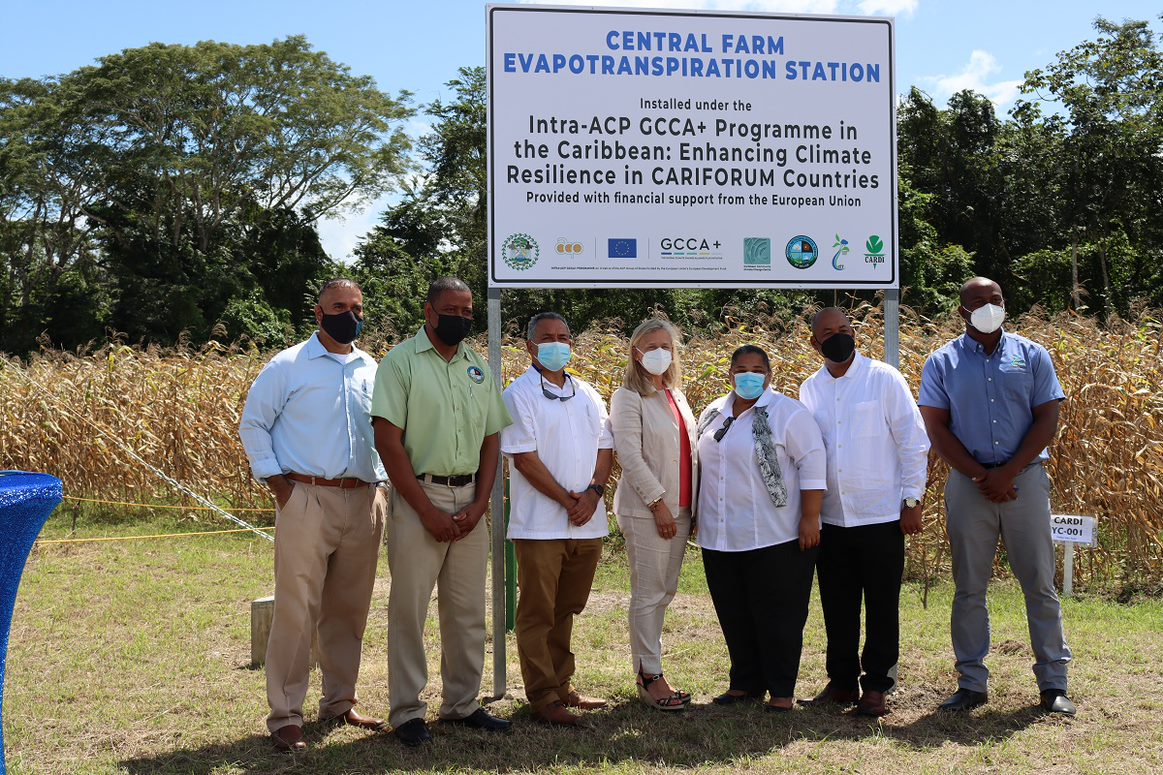 The evapotranspiration station at Central Farm will assist the National Meteorological Service with improved capacity to better forecast and predict the weather and provide important information that governs government decisions regarding key sectors of the economy such as agriculture, tourism, and water.
Minister Habet noted “as a country that is highly vulnerable to the impacts of climate change, it is imperative that Belize takes advantage of these opportunities aimed at enhancing resilience to extreme weather and climatic events linked to climate change”.
“The agricultural sector and small farmers in particular, often suffer the greatest losses from extreme events such as droughts and flooding. This, in turn,
threatens the food security of Small Island Developing States and Least Developed Countries such as ours,” he said.
The Minister acknowledged that adequate monitoring of the weather and climate is vital for building a climate-resilient society, and as such the government of Belize, through his ministry, is committed to providing the support that will be necessary to ensure the long-term sustainability of this project.
“This includes ensuring that these stations, as well as all others in the National Meteorological Service’s network of stations, are properly maintained and that the appropriate infrastructure is in place to adequately store, analyze and disseminate the information derived in a user-friendly and effective manner,” he said.
Standing in solidarity with Minister Habet, Ambassador Van Steen expressed her appreciation and satisfaction with the progress of the project being
implemented by the CCCCC on behalf of CARIFORUM noting that, the Station at Central Farm in Belize is just one of a much larger EU investment across the Caribbean aimed at improving observational and monitoring networks for weather and climate change.
“The Caribbean region is facing water and food insecurity due to climate change. The EU Programme is therefore aimed at strengthening how climate-related information can be used as planning and decision-making tools to tackle these issues,” she said.
Van Steen said the programme reflects the EU’s and Belize’s commitments to the Paris Agreement and is contributing to the region’s efforts in Climate Change adaptation.
During his opening remarks, Dr Young expressed gratitude to the EU for their funding assistance to the Project and stressed the importance of partnerships.
“These gifts of Automatic Weather Stations from the EU GCCA+ Programme builds on previous investments from the EU, USAID-CCAP, and other bi-lateral donors that include the USA and Germany,” he said.
Recalling the most recent devastation to the Caribbean from Hurricanes Irma, Maria and Dorian between 2017 and 2019, he lamented that “while these hurricanes would have momentarily captured the world’s attention, the citizens of these countries continue their efforts to rebuild even as they grapple with the psycho-social impacts and trauma associated with these extreme events, even as they continue to rebuild, they also have to face the challenges from the slow-onset events, like sea-level rise, droughts, ocean acidification, all caused by climate change and other extreme events”.
Also speaking at the inauguration ceremony was Omaira Avila-Rostant, Representative to Belize, of the Caribbean Agricultural Research and Development Institute (CARDI), who agreed that gathering and analyzing climate data in today’s climate environment is critical.
“Documenting the present and predicting the future has become important for many research institutions”, she said.
Recognizing that climate change and variability are “here to stay”, Avila-Rostant added “this is a production risk that needs to be constantly monitored in order to advise farmers on how to develop management techniques that bring about increased resiliency in production thereby guaranteeing food production and security”.
CMC/ed/2022