
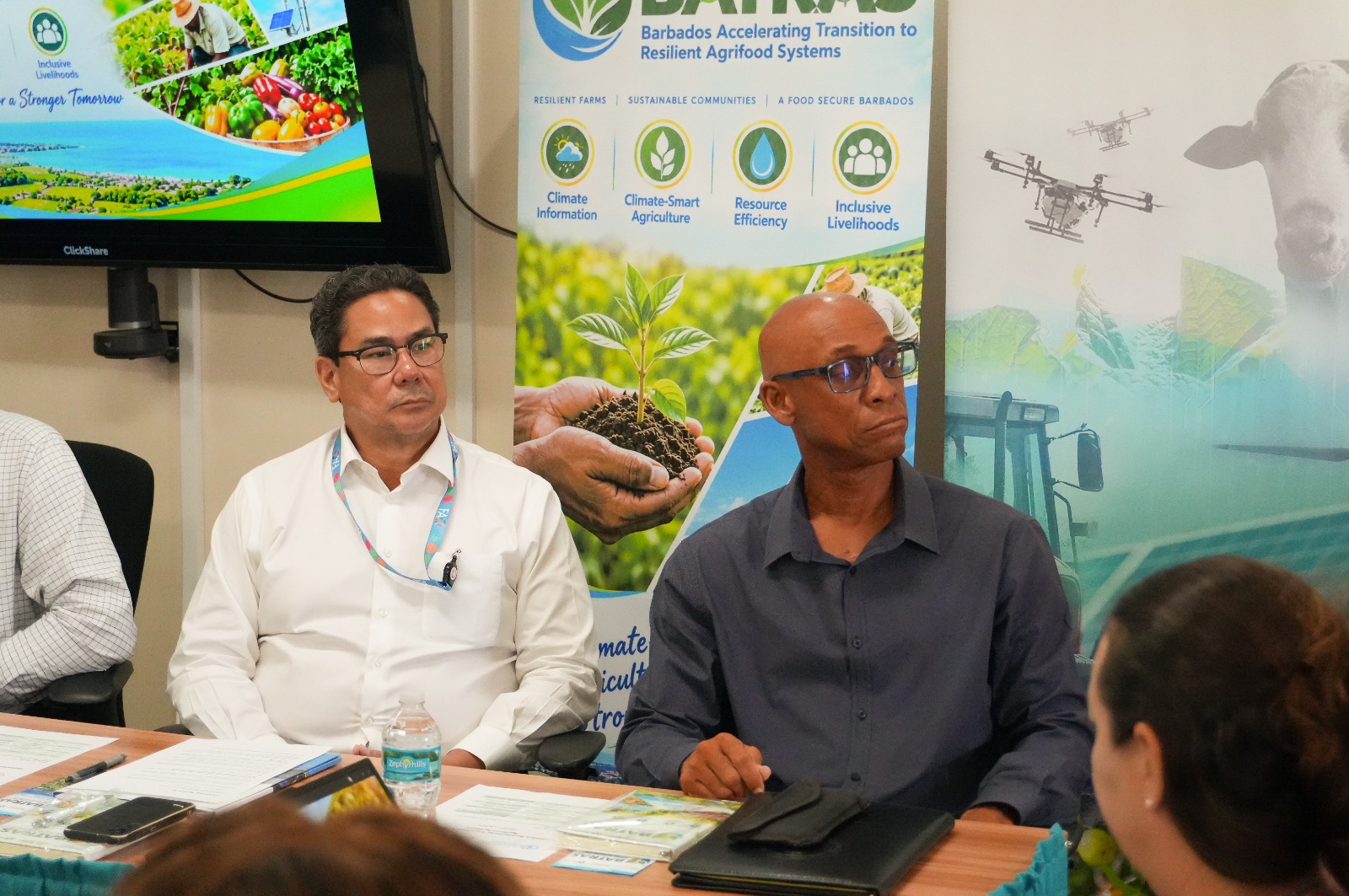
BRIDGETOWN, Barbados, Nov 5, CMC – Barbados is investing approximately US$3.5 million in climate-resilient agriculture as the island seeks to protect food production from the effects of drought, rising temperatures and increasing pressure on water resources.
The four-year Barbados Accelerating Transition to Resilient Agrifood Systems (BATRAS) project was officially launched through a partnership between the Government, the Food and Agriculture Organisation of the United Nations (FAO) and the Global Environment Facility (GEF), which is providing grant financing.
The initiative aims to strengthen agricultural production systems against climate change, improve productivity and farmers’ livelihoods, and contribute to national food security.
The Barbados Agricultural Development and Marketing Corporation (BADMC) will lead implementation under the strategic direction of the Ministry of Agriculture, Food and Nutritional Security, while FAO will provide technical oversight and expertise.
The project will focus on improving farmers’ access to climate information, introducing climate-smart technologies and sustainable production methods, and expanding access to financing, including matching grants.
At least 400 farmers are expected to receive training in climate-resilient agricultural practices through farmer field schools and on-farm demonstrations, with women accounting for 40 per cent of participants.
The initiative will also seek to strengthen national agricultural extension services and promote improved irrigation, soil and water management, and technologies suited to local production conditions.
Agriculture Minister Dr Shantal Munro-Knight welcomed the project’s focus on including women, young farmers and persons with disabilities.
“I am happy to see that this project will cater to women, young farmers, and the disabled. I see the very strong gender dynamics in this project, and the targets in relation to women’s participation again are welcome,” she said.
FAO Representative for Barbados (a.i.), Juan Cheaz Pelaez, said investments in water security must be accompanied by the knowledge, technologies and financing farmers need to improve production.
“Water availability alone does not guarantee agricultural transformation. Farmers also need knowledge, technologies, financing and institutional support to use water efficiently and productively,” he said.
A gender assessment conducted for the project found that women operate approximately 39 per cent of agricultural holdings in Barbados, but those holdings account for only six per cent of the country’s agricultural land.
The assessment identified limited access to land, financing, equipment and technical training as barriers to women’s participation and growth in the sector. Young people also face challenges accessing the resources, skills and opportunities needed to establish viable agricultural enterprises.
Through its Gender Action Plan, BATRAS will seek to improve access to training, climate-smart technologies, financing and other project-supported opportunities. It will also monitor whether these interventions lead to improvements in productivity, economic opportunities and livelihoods.
During the launch, Project Coordinator Dwayne Squires outlined the initiative’s objectives and planned activities, while farmer Peggy Scott shared her experiences and examples of the challenges facing agricultural producers.
FAO Plant Production and Protection Specialist and BATRAS Lead Technical Officer Anne Desrochers said the project’s success would ultimately depend on the benefits it delivers to farmers.
CMC/ed/2026