
PORT OF SPAIN, Trinidad, Jul 18, CMC – The Trinidad-based The Caribbean Court of Justice (CCJ) has reserved its judgment in a wrongful dismissal case involving former employee of the Massy Stores Limited, Merton Forde.
The CCJ, made its ruling following submissions from both sides on Thursday during a virtual sitting.
Massy Stores is asking the CCJ, which is Barbados’ highest and final court, to overturn the decision of the Barbados Court of Appeal, which upheld a magistrate’s preliminary ruling that found Forde’s summary dismissal on the grounds of “substandard work performance” and failure to enforce company rules, policies and procedures despite verbal warnings to be wrongful.
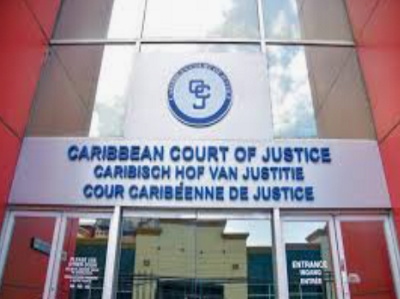 But the attorneys for the company are arguing among several grounds that the Court of Appeal applied the incorrect test for wrongful dismissal.
“This is a relatively straightforward appeal dealing with a rather narrow, but critical point of law, defining the scope, in our view, the cause of action for wrongful dismissal,” attorney Michael Koeiman, one of three lawyers representing the company. The other two lawyers are Ashley Edwards and Dionne Walcott, while Tariq Khan appears for Forde in association with Mechelle Forde.
Koeiman argued that recent case law in Barbados appeared to reflect a judicial trend towards leniency, which, in the court’s view, had broadened the traditional test for summary dismissal. He said the lower court in this matter had referred to what it called a “humanising Fatima”, suggesting that the issue was no longer simply whether the employee’s conduct was repudiatory.
According to the attorney, this development seemed to introduce a two-stage test: first, determining whether the conduct warranted dismissal; and second, whether it was serious enough to justify summary dismissal.
“Our position is that, properly understood, that is not the test,” Koeiman said, urging the court to review the law and “express an opinion for the guidance for all concerned”.
But In response, Khan referred the court to the December 21, 2012 termination letter issued to Forde, submitting that it appeared to be a generic template rather than a document tailored to the specific circumstances of the case.
“It is as broad as throwing a net in the ocean to catch at anything that comes into that net,” he said, adding that the portion of the letter of dismissal read: “This incident [the removal of rotten fish from the store] occurred, despite verbal warnings regarding inter alia.”
The attorney said that this section as disjointed and disconnected, arguing that unrelated events had been bundled together to justify the dismissal, without providing any substantive explanation or context.
Khan said that the letter did not clearly state that Forde was being dismissed for breaching a zero-tolerance policy.
“it simply throws a number of things together,” he said, adding that there was no record of instances of verbal warnings.
“The appellant hasn’t been able to produce [any]. That is significant,” he told the CCJ.
CMC/gh/ir/2025
)