
NASSAU, Bahamas, Jul 30, CMC -The Bahamas government says the ruling by the International Court of Justice (ICJ) last week underscores that states have legal obligations under international law to protect the environment.
Prime Minister Phillip Davis in a statement to Parliament said that failure to reduce emissions, failure to regulate polluters, and failure to assist those harmed by the climate crisis are not acts of omission, telling legislators “they are breaches of law.
“This was not just a scientific judgment, although the science is clear. It was not just a moral appeal, although the moral case is overwhelming. It was a legal finding, built on decades of treaties, legal principles, and growing recognition that the damage done to small island states like ours is not theoretical. It is real, and it is unjust,” he added.
 Last week, the ICJ delivered its landmark advisory opinion on the “obligations of states with respect to climate change” determining that the 1.5°C temperature target is legally binding under the Paris Agreement and that all states, in particular the largest emitters, must take ambitious mitigation measures in line with the best available science.
The opinion came six years after a group of 27 students from the University of the South Pacific began campaigning on this issue, and more than two years since the United Nations General Assembly (UNGA) adopted a resolution requesting the advisory opinion.
The court rejected arguments from some high-emitting states that climate treaties are the only applicable law to the climate crisis, excluding broader international law. It found that multiple sources of law impose legal duties on states to prevent “transboundary environmental harm,” act with precaution, and take due diligence measures to reduce greenhouse gas (GHG) emissions and adapt to the adverse impacts of climate change.
Prime Minister Davis told Parliament that last week the world paused to listen to the judgement “and for the first time in a very long time, the world heard with clarity what they have been hoping, asking, and demanding.
“We can all agree, whatever our politics, our profession, or our standing, that The Bahamas has a God-giving human right to survive. To live in safety. To fully enjoy the earth we occupy. To raise children without fear that the next storm, the next flood, the next silent rise in sea level will erase what generations have built.”
Prime Minister Davis said that the ICJ confirmed that this is not simply an emotional claim.
“It is a legal one. And that matters. It matters to the family in Moore’s Island still recovering from Hurricane Dorian. It matters to the children in Mayaguana learning about climate change not from textbooks, but from their own lived experiences. And it matters to us here in this chamber, tasked with the highest responsibility of all, to defend the right of our people to exist,” he said.
Prime Minister Davis said he was urging legislators to reflect on what the ICJ ruling means for a country like The Bahamas, noting “we are a nation built on coastlines, on low-lying land, and on fragile ecosystems.
“Every flood, every storm surge, and every piece of coral lost to warming seas, chips away at the physical foundations of our country. But it also chips away at something deeper, our confidence that we will be able to hand this place, these islands, to our children as our parents handed them to us.”
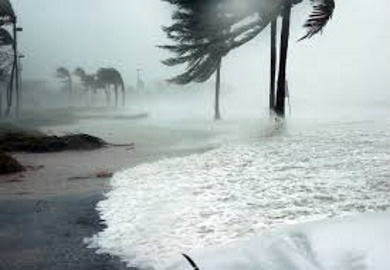
Prime Minister Davis recalled that the country was hit by four major storms, including Category 4 and Category 5, within just one decade, adding that every hurricane leaves the country less fiscal space to invest in people, the economy, and the future.
He said following the hurricanes, the country has had to borrow to recover and rebuild, resulting in an increase in the debt burden.
“At least 40 per cent of our national debt is directly attributed to the loss and damage resulting from these hurricanes. Then as the size of our debt grows, we pay higher interest rates. And the risk of future hurricanes is priced in as well.
“Insurance premiums are higher, and our interest rates would be lower if those who hold our debt were not worried about the most intense storms coming our way. We are paying for storms we’ve suffered through, and we are paying for the storms of the future as well.”
Prime Minister Davis said that his administration has worked so hard for fair climate finance because “we want to exit this climate debt trap.
“We want to use our resources to invest in our people, and our future. That is why this ruling matters. Because for once, the law sees what we see. For once, the law speaks the truth we live with every day.”
Prime Minister Davis praised Attorney General, Ryan Pinder, KC, saying that his submissions to the ICJ “ were thoughtful, grounded in the lived experience of our people, and legally robust”.
He also thanked Ambassador Cheryl Bazard, representing the Organization of American States (OAS), who “brought a Caribbean voice and a Bahamian sensibility to those proceedings.
“Two Bahamians, before the world’s highest court, giving voice to a cause larger than any one country, but rooted in our own story. It is often said that small countries must shout to be heard. Last week, we were heard, not because we shouted, but because we spoke with clarity, honesty, and purpose.
“The ruling is advisory, not binding. That must be acknowledged. But its authority is unquestionable. It draws from the entire body of international environmental law. It provides guidance to future courts. And it offers countries like ours a firm foundation on which to build our case, make our demands, and exercise our diplomacy.”
Prime Minister Davis said that the ruling confirms that climate change is a human rights issue and that the the right to life, to housing, to health, and to culture are all affected by environmental degradation.
“We are not asking for special treatment. We are asking for fair treatment. We are not asking for favours. We are asking for the law to be upheld. And we are not seeking confrontation. We are seeking justice,” he told legislators.
Davis said that the ruling must inform the country’s foreign policy, adding “It must guide our engagement at the Conference of the Parties (COP) negotiations and in every bilateral discussion where the question of climate justice is on the table.
He said the ruling must also inform domestic choices.
“We cannot demand action from others and remain static ourselves. We must continue to invest in climate resilience, strengthen our disaster response, protect our marine resources, and shift our own systems towards cleaner, more sustainable practices.”
CMC/gh/ir/2025