
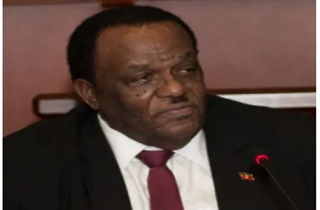
ST. JOHN’S, Antigua, Jul 12, CMC – Parliament has referred the National Sex Offender Register Bill, 2022 to a select committee after an opposition legislator, Trevor Walker, raised several concerns including the possibility of infringing upon the rights of the sex offender.
The bill, which was tabled in the Parliament on Monday, proposes that members of the public who wish to know if an individual has been convicted of a sex crime and is on the register must apply to the Commissioner of Police to get that information.
Legislators have also raised concern that a convicted sex offender faces a stiff fine if he or she fails to provide information to the police regarding their travel abroad, including the address at which they will stay.
Attorney General Steadroy Benjamin, will chair the select committee that includes Opposition Leader, Jamale Pringle and Walker along with government legislators Dean Jonas, Daryll Matthew and Maria Bird-Browne
Speaker of the House of Representatives, Sir Gerald Watt, QC, had also raised some concerns about the legislation.
Benjamin said the legislation will be broad-based and that the information collected through the register will be shared nationally and with other territories in the region with which Antigua and Barbuda has security agreements
He added that the possibility exists that other countries outside the Caribbean region may also eventually become privy to the information collected.
“It has been a problem in the islands, in the OECS (Organisation of Eastern Caribbean States) and around the world, that many sexual predators that have been convicted have a tendency of moving country to country, community to community, and it is felt that it is necessary that families, persons, institutions be informed when convicted sexual predators move into their jurisdiction,” Benjamin said.
The government said that unlike, for example, in the United States where the public has direct access to sex offender registries and can conduct a search for offenders using only the offender’s name, in Antigua and Barbuda, residents will have to petition the Commissioner of Police for the information. “Any person, who is suspicious of an individual in the community can actually apply to the Commissioner of Police for information concerning that particular person,” Benjamin said.
“So, if that person is seen to be around little children all the time, shows extreme interest in them, a parent, a concerned individual, an institution, can write to the commissioner…that information of course is kept between the Commissioner of Police and the person making the request.”
The government said persons subject to inclusion in the National Sex Offender Register are people convicted of sexual assault, indecent assault, sexual indecency and house break-in, coupled with intent to commit a rape.
The offences covered include, but are not limited to, the distribution of child pornography, prostitution involving a minor, incest and sexual intercourse with a minor employee.
Benjamin told legislators the database will contain key information on the sex offender including their name, nationality, address, employment history, fingerprints, photographs and the names of institutions they are affiliated with.
There will also be strict requirements by which offenders must abide during “the reporting period” which will be determined by the offender’s sentence.
Non-custodial sentences will result in three years of reporting in person to law enforcement authorities over a period of six-months. Sentences less than five years will be subject to five years of reporting. Sentences not exceeding 10 years will require seven years of reporting while terms of imprisonment longer than 10 years, but less than 15 will require the offender to report for 10 years.
A sentence of 15 years or greater will require 15 years of reporting. Offenders will also be required to inform the police of changes in their address or their plans to move abroad so that this information can be shared across borders
“We are there to protect the people from sexual predators who would seek to abuse and take advantage of that section of our society,” Benjamin told Parliament.
During the debate, the government legislators, Bird-Browne, Jonas and Matthew argued against the e proposal that residents must write to the Commissioner to ascertain someone’s status as a sex offender, with Bird-Browne, the wife of Prime Minister Gaston Browne, even threatening to withhold her full support of the bill.
The Housing, Lands and IUrban Renewal Minister argued that Section 7 of the bill, which addresses those who can access the register, needed to be reviewed so that the public can be adequately protected from sexual predators.
“These sexual offenders have no right being out there being willy-nilly afterwards. “Yes, they may have served their time, convicted sexual offenders, but individuals have a right to know who they are.
“When they show up at your doorstep, probably to do a job at your home, they show up as a coach travelling with your daughter or son overseas, or they show up as a candidate at your doorstep, we need to be able to have access to this information. And Mr. AG, through you Mr. Speaker, I will not support (the Bill) fully, until this part is amended,” Bird-Browne said.
For his part, Jonas, the Minister for Social Transformation, said the disputed section of the bill was limited.
“The reason why we are creating this registry is to protect the public. So why keep the information from the public? It makes no sense! This Act is not being made to protect the offenders and the paedophiles; this Act is being made to protect children and women,” he said, with his colleague, Mathew, the Education and Sports Minister, saying the government must spare no effort in protecting the nation’s most vulnerable from sexual predators.
He said while the register will be made available to school administrators, limiting accessibility to educators was not sufficient, as children also frequent sport and recreational facilities where those intent on doing them harm may be lurking.
“We must create that sort of safe, enabling environment and when you do not have access to public information, Mr. Speaker, when that register is not made public, it creates an avenue where an already convicted sex offender can become a repeat offender because these things are done in secret and are done under a cloak of secrecy.
“It must be public,” he added.
Walker agreed that sexual offences should not be trivialised, advising that legislation as impactful and sensitive as this should not be implemented due to emotion, but through practical and thorough discussions.
He said that while victims’ rights should be protected, there should be some measure of caution when posting the names of convicted persons as it “may not leave room for someone to rehabilitate” noting that there are some particular cases involving remorseful young men who, because their names and other personal information will be plastered in the public domain, could have an “unwelcomed tag for life” despite them trying to change their life around.
“There’s grace. There’s forgiveness and at the end of the day you are not supposed to be tagged as the worst individual in the world,” Walker said, adding “my point to this is, fine, you create the register and you are going to have malicious intent; face it, we are a small community.
“You want the information, you create a simple process as the Bill suggests whether it’s a two-line application and then you make it and the reason why. You must say the reason why because under our constitution we have a right to privacy; it is there in section two.”
CMC/fd/ir/2022