
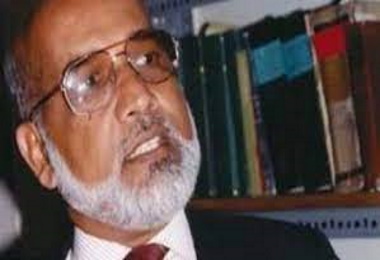
PORT OF SPAIN, Trinidad, Dec 26, CMC – A chairman of a three-member Advisory Committee on the repatriation of Trinidad and Tobago nationals caught up in Syria and other war zones, says its work is being stymied and it has hit a dead end.
Former House Speaker, Nizam Mohammed, told a radio station here on Tuesday that no progress has been made in getting nationals back home.
Last May, Mohammed said the committee required more information on the people involved and was still setting up. He said then that they had a database of 100 stranded nationals, with children accounting for almost half while the rest are women.
He said the committee had established contacts with foreign governments.
“We have clearly identified certain areas where we could have made some progress, but bearing in mind we have not been provided with any facilities and resources. As a committee you can imagine, the embarrassing situation which I have found myself .
“I can tell you this much, the relatives, some of them with whom we have been relating, they full understand our position and if you look at some of the publications that have come from through the relatives and those who are assisting them, you will see very clear;y they understand how stymied we are,” Mohammed told radio listeners,
The other committee members are former ambassador Patrick Edwards and Islamic leader Kwesi Atiba.
Human Rights Watch (HRW) claims that more than 90 Trinidad and Tobago nationals, including at least 56 children, are unlawfully detained in life-threatening conditions as Islamic State (ISIS) suspects and family members in northeast Syria.
It has urged Trinidad and Tobago government to take the steps to get them repatriated, noting also that the conditions in the camps and prisons holding the Trinidadians and other ISIS-linked suspects and family members are increasingly dire.
Last November, two HRW senior officials said during the last six months, Azerbaijan, Canada, Denmark, France, Kazakhstan, Kyrgyzstan, Norway, Russia and Tajikistan had repatriated over 400 of their citizens from northeast Syria, while Iraq has taken about 1,300 home.
The authorities here have cited various reasons for being unable to repatriate citizens , including challenges in verifying the identification and nationality of those requesting repatriation, as well as ascertaining whether those requesting repatriation, including children, have engaged in violence, including with ISIS.
Mohammed told radio listeners the current situation is regrettable, noting that committee has not be in a position to offer the families and relatives “anything substantial…and I fully understand how they feel”.
He said “within recent times” the relatives have been voicing their concerns…but as I said before we are an advisory committee and all we can do is advice, we have sent in several reports and we are awaiting positive responses on our advice and our suggestion and it seems as if no one, up to now, is enthusiastic as we are or as the relatives are”.
CMc/ag/ir/2023
.