
PORT OF SPAIN, Trinidad and Tobago, Sept 12, CMC – Government is moving to revive legislation for Zones of Special Operations (ZOSOs), just months after its previous attempt to pass the controversial crime-fighting measure failed in the Senate.
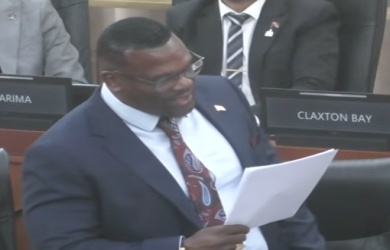
Homeland Security Minister Roger Alexander announced the Government’s intention in the House of Representatives on Friday, saying the legislation would form part of its strategy to tackle crime after the State of Emergency ends on September 17.
He said ZOSOs would combine security operations with community development in designated areas, providing what he described as “special measures to uphold the rule of law, public order, citizens’ security and public safety”.
Alexander said the approach should not be viewed solely as a law enforcement measure, arguing that security interventions must be paired with efforts to address conditions in affected communities.
“The Zones of Special Operations is not simply about sending law enforcement into a community. It is about security and community development working together,” he said.
He cited initiatives underway through his Tunapuna constituency office, including engaging young men, helping elderly residents learn computer skills, and providing medical assistance.
“That is what the Zones of Special Operations is. Where someone is sick in the area, we bring the doctor to them,” Alexander said.
The Government’s move follows the defeat in January of the Law Reform (Zones of Special Operations) (Special Security and Community Development Measures) Bill, 2026, after it failed to secure the required three-fifths majority in the Senate. Parliament records the bill as defeated.
The bill had faced criticism over human rights concerns and safeguards surrounding the proposed powers. Under the bill, the Prime Minister would have been able to designate communities as Zones of Special Operations, with joint police and Defence Force operations permitted within those areas.
The proposed measures included warrantless searches, curfews of up to 72 hours and detention powers. The bill also provided for a Social Committee to coordinate interventions including housing, healthcare and infrastructure.
Opposition Leader Pennelope Beckles has criticised the Government’s decision to bring the legislation back, describing the move as an attempt to create a permanent expansion of State power.
In her statement, Beckles questioned whether ZOSO would become the Government’s response to crime after the State of Emergency ends.
She said the legislation was “not what is best for this country” and alleged that it could be used to “victimise, punish and oppress” people considered opposed to the Government’s policies.
Beckles also criticised Prime Minister Kamla Persad-Bissessar for not attending the parliamentary sitting at which Alexander made the announcement.
She questioned whether the Prime Minister would disclose the names of two Independent Senators whom she had previously alleged wanted bribes to support the legislation.
Alexander, meanwhile, said the end of the State of Emergency would not mean an end to the Government’s efforts to combat crime.
“The emergency powers will end, the fight against crime will continue,” he told Parliament.
CMC/ed/2026